 HVAC
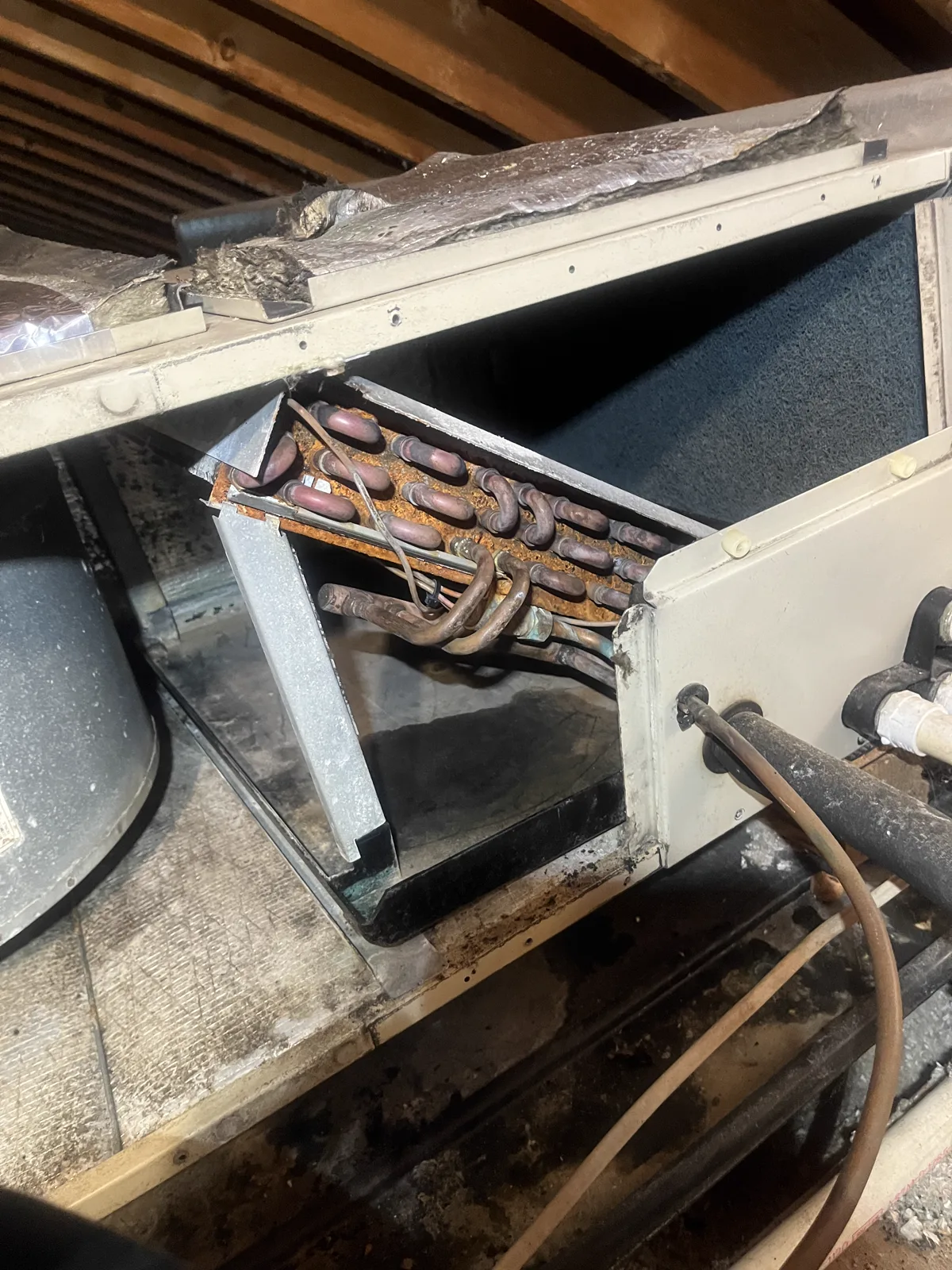
Evaporator Capillary Tube Repair
Completed HVAC evaporator-coil work focused on a leaking capillary tube, with close documentation of the coil and refrigerant tubing.
View completed workCommercial building systems
Commercial HVAC service in Bucks and Montgomery County for rooftop units, packaged systems, ventilation, and building comfort problems. Plan service around your site.
Selected brands
Service categories
Choose your equipment below to see the problems we investigate and what to prepare for a service visit.
Commercial HVAC repair, installation, replacement, maintenance, design, retrofit, and controls.
Explore service → 02Packaged rooftop cooling, gas-electric, heat-pump, economizer, and ventilation equipment.
Explore service → 03Variable-refrigerant-flow systems, branch controllers, indoor units, heat recovery, and networked controls.
Explore service → 04Air-cooled, water-cooled, scroll, screw, and centrifugal chiller systems.
Explore service → 05Open and closed-circuit towers, fluid coolers, fans, water distribution, and controls.
Explore service → 06Air-handling units, fan coils, coils, filters, fans, valves, drainage, and controls.
Explore service → 07Packaged terminal air conditioners and heat pumps for hospitality and multifamily properties.
Explore service → 08Gas-fired, hydronic, infrared, radiant-tube, and warehouse unit heaters.
Explore service → 09Direct-fired, indirect-fired, tempered, and unconditioned make-up air equipment.
Explore service → 10Building controllers, sensors, actuators, schedules, sequences, alarms, and equipment integration.
Explore service →Useful before service
01Equipment identificationBrand, model, serial, configuration, and installation type.
02Observed symptomsTemperature, timing, sound, leaks, alarms, frost, and recent changes.
03Property accessService ZIP, parking, roof or mechanical-room access, and operating hours.
One tenant may report a hot office while another complains about drafts. Before a commercial HVAC visit, identify which spaces are affected and whether the complaint follows a schedule, weather change, or equipment shutdown. Building layout and operating hours help connect a room-level complaint to the equipment serving it.
For rooftop or mechanical-room systems, provide the equipment location, site contact, access procedure, and any purchase-order requirement. If the property uses a building automation system, note who controls schedules and setpoints.
A broken blower, failed control, or equipment lockout calls for diagnosis. A new tenant layout, changed kitchen exhaust, or extended operating schedule may call for a broader review of airflow and capacity. Explain what changed before the problem appeared so those two situations are not confused.
Use rooftop unit repair for packaged roof equipment and make-up air repair for systems supplying replacement air to an exhaust-heavy space. For several different systems or an unclear fault, request commercial HVAC repair and list the affected areas.
Recent completed work
See recent repairs documented by our technicians with actual photos of the equipment and completed scope.
HVAC
Completed HVAC evaporator-coil work focused on a leaking capillary tube, with close documentation of the coil and refrigerant tubing.
View completed work HVAC
Completed HVAC furnace repair with PCB and igniter replacement, documented at the open furnace and lower control compartment.
View completed work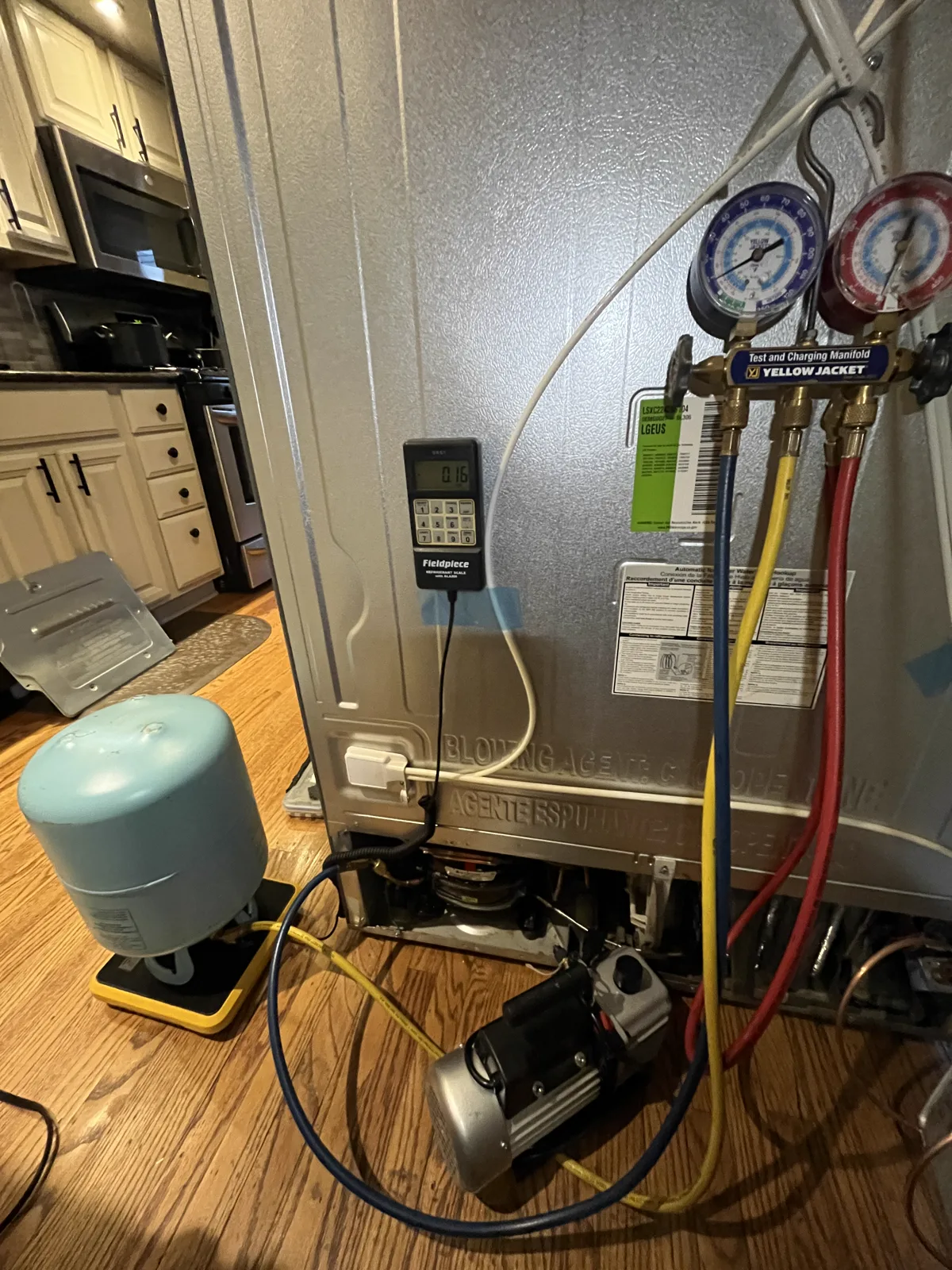 Residential Refrigeration
Filter drier replacement and system flushing on an LG refrigerator sealed circuit.
View completed work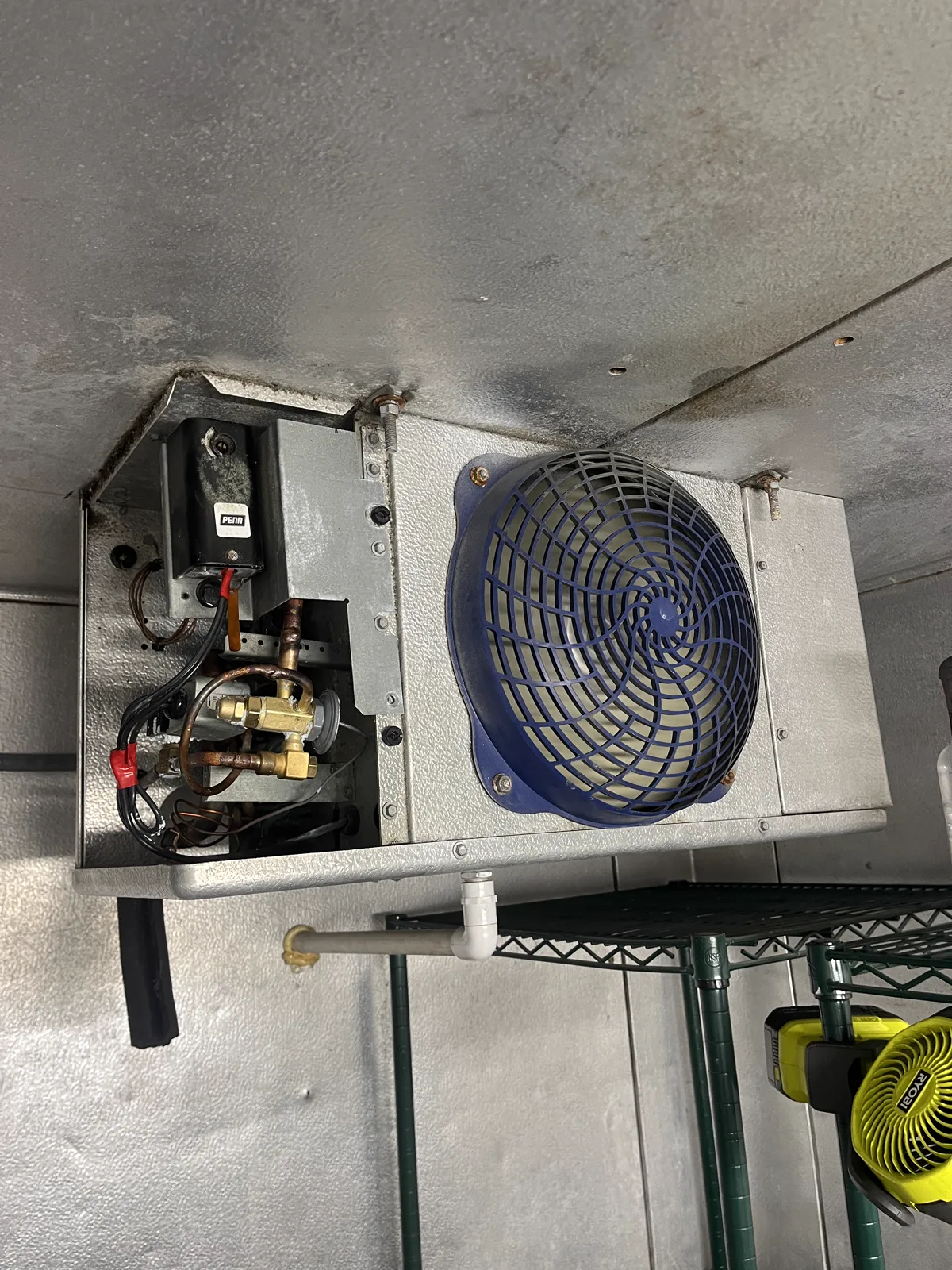 Commercial Refrigeration
TXV valve replacement and a refrigerant-system flush for contamination in a walk-in cooler.
View completed workQuestions & answers
Arrange an on-site contact who can provide equipment access and identify the affected spaces. If another person approves repairs or controls the building automation system, include that contact as well.
Include restricted hours, quiet periods, and access windows in the request. Scheduling depends on current availability and the work involved. Tell us about those limits before an appointment is confirmed.
A commercial HVAC problem is often first reported as a business problem: an uncomfortable reception area, a warm office during afternoon occupancy, or a work area that does not receive adequate conditioned air. Those observations matter alongside the equipment name. Premier Refrigeration & HVAC provides commercial HVAC service in Bucks and Montgomery County with attention to the affected zones, the operating schedule, and access to the system.
When requesting service, identify the areas affected and whether other parts of the building remain comfortable. Include changes in occupancy, room use, or operating hours that coincided with the issue. A clearly defined complaint helps distinguish a localized control or distribution concern from a fault affecting an entire unit, and gives the responsible property contact a more useful basis for reviewing proposed work.
A site with multiple rooftop units needs more than the statement that the air conditioning is not working. Unit numbers, roof plans, or existing service records can help connect a complaint to the correct equipment. Tell us which tenant space or zone is affected and whether the equipment also provides heating. A visible alarm or building-system notification is useful when its exact wording is preserved.
For rooftop unit repair, explain roof access requirements, property-management procedures, and any restrictions on equipment shutdown. Do not ask occupants to climb onto the roof to collect details. Existing labels, maintenance records, and information already available to site staff can be shared first; physical inspection and equipment identification can be completed through appropriate service access.
Commercial comfort may depend on equipment beyond a packaged rooftop unit. An air handler, fan coil, chiller, or related distribution system can serve several areas with separate controls. A warm zone does not automatically establish which part of that arrangement has failed. The investigation needs to follow the way heating or cooling is generated, delivered, and controlled at the affected location.
If your building uses central cooling equipment, provide the system type and the relevant service records when arranging chiller repair. For air delivery concerns, describe which outlets or occupied areas differ from the others and whether the pattern changes during the day. This makes the initial scope more precise than applying the same repair assumptions to every commercial building.
A building can reach its thermostat setting while occupants still report poor air movement or a change associated with exhaust operation. Describe whether the complaint begins when kitchen exhaust, process exhaust, or another building system starts. Door behavior and differences between adjoining areas may also be useful observations, although they do not establish a diagnosis by themselves.
Make-up air unit service considers equipment that supplies replacement air as part of the building arrangement. The relationship with exhaust and occupied spaces matters when defining the work. Changes to ventilation should be assessed in the context of the actual system rather than addressed by closing outlets, altering controls, or disabling equipment to change the immediate symptom.
An office that is uncomfortable only at opening time presents a different question from a building that never reaches its setting. Record the occupied schedule, the actual time the complaint occurs, and any recent control changes. Where several zones share equipment, identify whether the same pattern occurs everywhere or only at particular thermostats or controllers.
For connected systems, building automation service can address the relevant control behavior alongside the equipment it operates. Existing alarm histories and trend information can be useful if your site already records them. Provide those records through the property’s normal process; there is no need to alter programming or repeatedly clear alarms before a technician can review the reported condition.
New equipment must fit the building’s intended use and the existing infrastructure. Changes in tenancy, internal layout, occupancy, or operating hours may make a like-for-like equipment choice an incomplete starting point. Discuss ductwork, controls, electrical requirements, equipment location, and service access as part of the proposed scope, together with the heating and cooling requirements of the space.
With commercial HVAC installation, clarify whether the project serves a new area, replaces existing equipment, or changes the system approach. For an existing failure, compare repair findings with replacement options before committing to a larger project. Define affected zones, anticipated coordination needs, and which existing components remain so decision-makers can compare proposals that cover equivalent work.
A useful commercial HVAC maintenance plan begins with the equipment actually on site. Identify the units included, their locations, their operating schedules, and any seasonal equipment that may otherwise be missed. The scope should explain the intended inspections and care, how findings will be reported, and how separately recommended repair work will be handled.
Before arranging service in Bucks or Montgomery County, name a contact who can provide access and a person authorized to review repair recommendations. Share existing maintenance records and recurring complaints, including problems that disappear before scheduled visits. Clear coordination helps keep the visit focused on the building’s needs and gives owners or managers a documented basis for the next repair, replacement, or maintenance decision.
Ready to request service?
Online service request
Share the equipment, location, and preferred appointment window. We will contact you to confirm availability.