 Residential Refrigeration
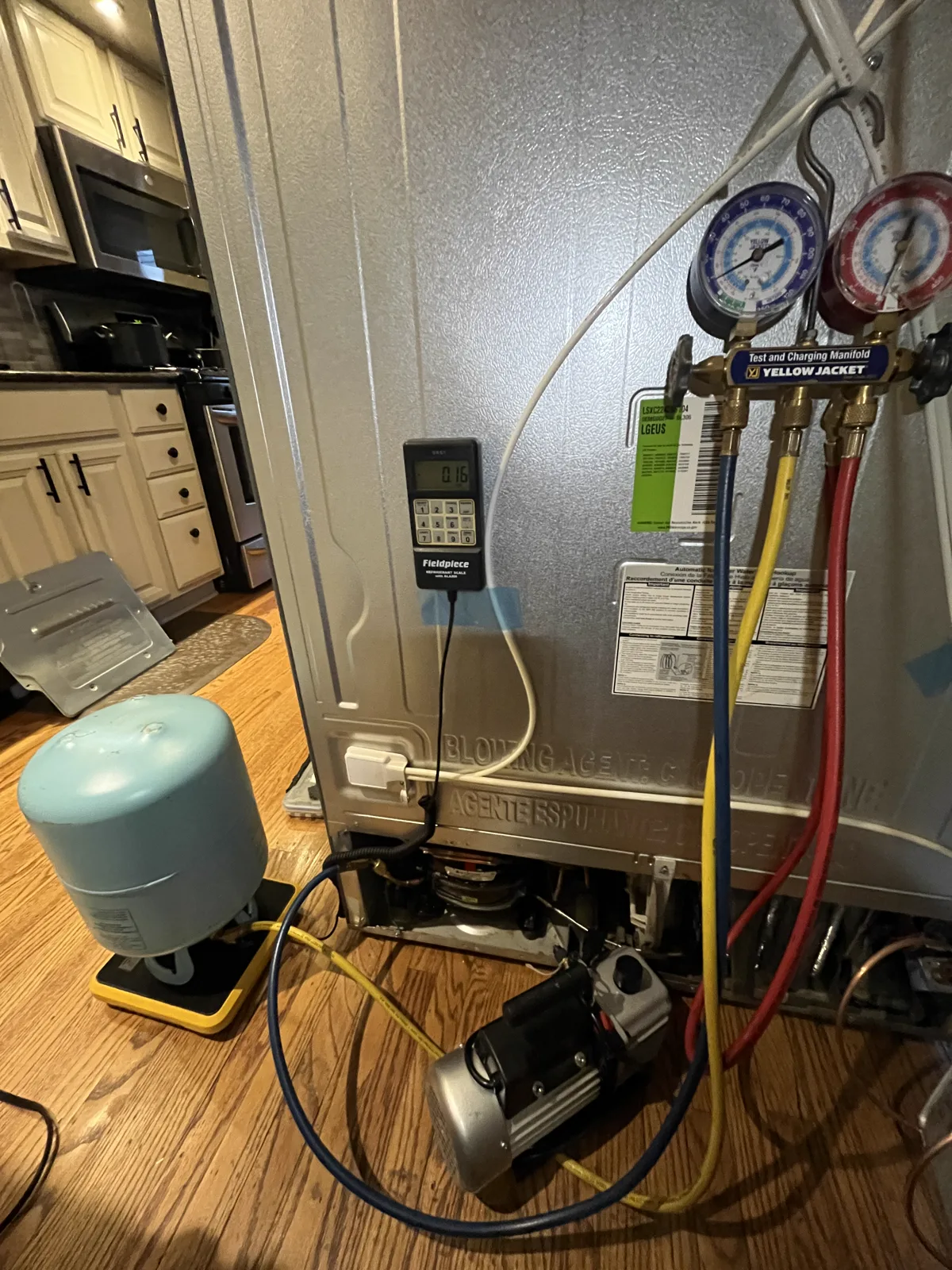
LG Filter Drier Replacement
Filter drier replacement and system flushing on an LG refrigerator sealed circuit.
View completed workPlanned equipment care
Refrigeration and HVAC maintenance planning in Bucks and Montgomery County. Define the equipment, visit scope, and schedule before arranging a maintenance plan.
A maintenance plan should identify what is being maintained and why. A household wine cabinet, a restaurant ice machine, and a rooftop HVAC unit need different checks. List each model, its location, current condition, and any known problem before discussing visit frequency.
Ask which tasks are included, how findings are recorded, and when a repair needs separate approval. Maintenance does not replace diagnosis of an existing fault. A clear plan distinguishes routine care from work needed to correct a problem already affecting performance.
Recent completed work
See recent repairs documented by our technicians with actual photos of the equipment and completed scope.
Residential Refrigeration
Filter drier replacement and system flushing on an LG refrigerator sealed circuit.
View completed work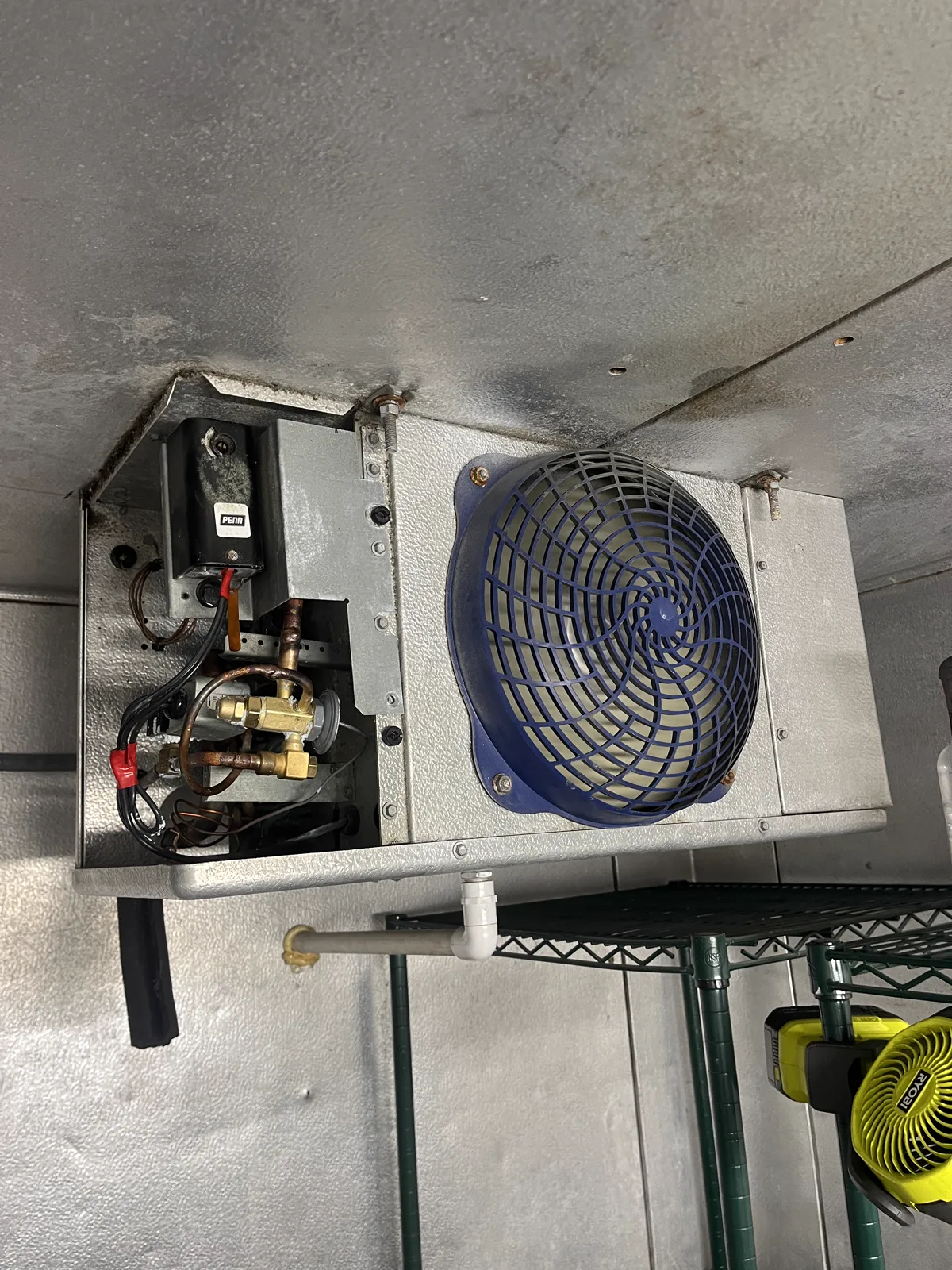 Commercial Refrigeration
TXV valve replacement and a refrigerant-system flush for contamination in a walk-in cooler.
View completed work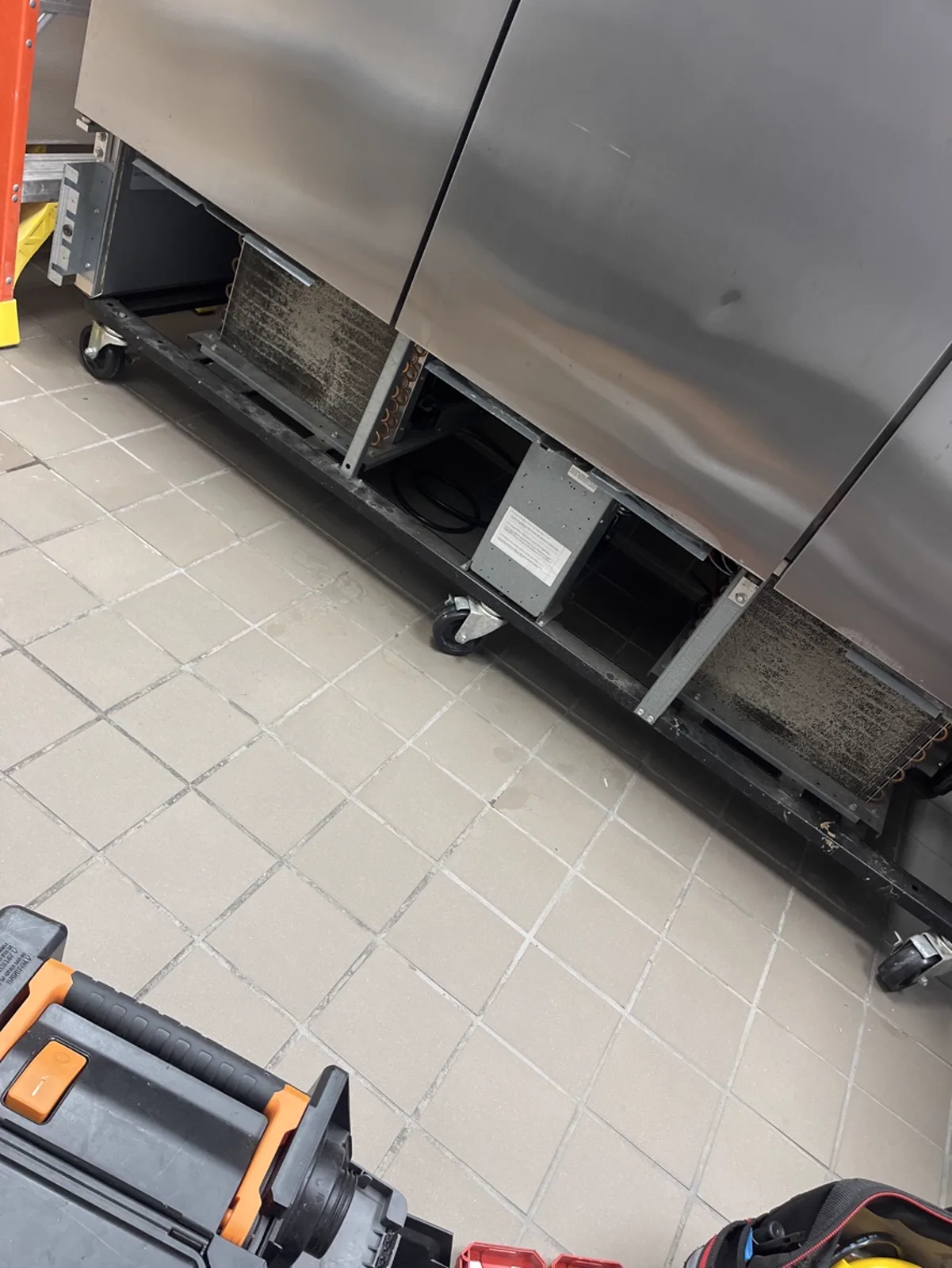 Commercial Refrigeration
Before-and-after chemical deep cleaning of a commercial True refrigerator condenser.
View completed work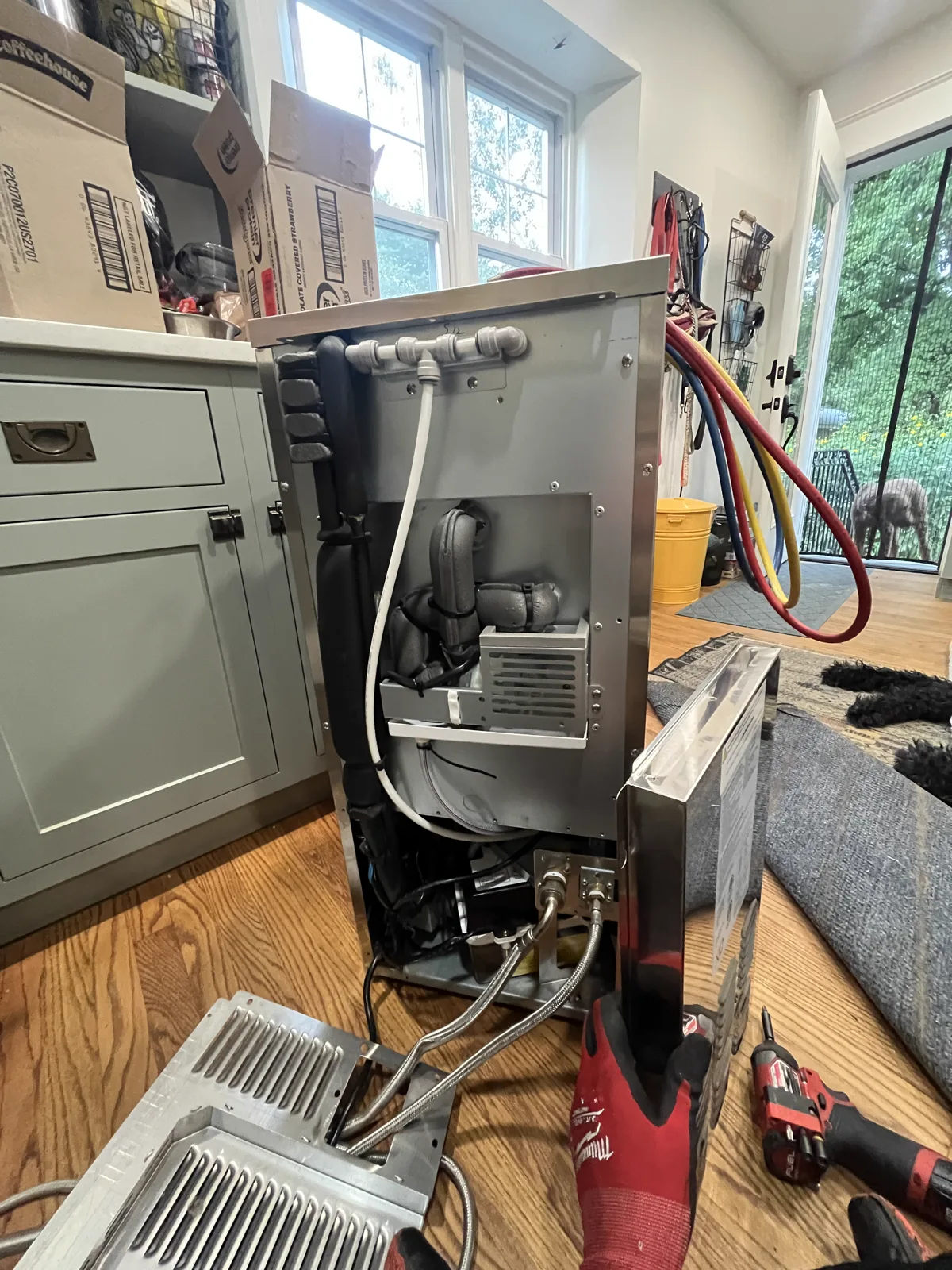 Commercial Refrigeration
Water pump replacement and water-line cleaning inside a commercial ice maker.
View completed workA useful refrigeration and HVAC maintenance plan starts with the equipment you actually operate. A home with a heat pump and a built-in refrigerator needs a different scope from a restaurant with walk-ins, prep tables, an ice machine, and rooftop HVAC. Premier offers maintenance planning in Bucks County and Montgomery County, Pennsylvania. Identify each unit, its model when available, and where it is installed so the proposed visits can be matched to the property.
Include systems that are easy to overlook: an undercounter beverage refrigerator, a rarely used second heating zone, or an ice machine in a separate service area. For a commercial site, an equipment list should distinguish multiple cabinets carrying the same brand. Unit numbers and installation locations help connect observations to the right machine. Record any equipment already showing faults, because a preventive visit and an investigation of an existing breakdown need different expectations.
Usage, the surrounding environment, and manufacturer instructions affect how often equipment needs attention. Long operating hours, grease, dust, heavy door traffic, and limited access can all influence maintenance planning. A unit in a clean, lightly used room should not automatically receive the same scope as equipment beside an active cooking line. Discuss seasonal demands and the practical times when the equipment can be taken out of use for service.
A schedule is also something to review. If observations show repeated buildup, drainage concerns, or a change in performance between visits, the interval or scope may need adjustment. Conversely, adding visits without understanding the equipment does not guarantee better results. Ask what will be checked, what cleaning is included, and which findings would lead to a separate repair recommendation. Maintenance helps identify concerns; it cannot promise that every component failure will be prevented.
For commercial refrigeration maintenance, discuss the cabinets and rooms in relation to loading patterns, door use, heat rejection, and the work performed around them. Accessible surfaces may look clean while the machinery compartment needs attention. Door hardware, seals, drains, and airflow also deserve consideration where applicable. A plan should define the equipment covered and the access needed, rather than treat every refrigerated box as interchangeable.
Cleaning is not a substitute for diagnosing poor cooling. If a walk-in runs warm, a cabinet repeatedly freezes up, or a prep table cannot recover during normal use, report that concern before the visit. Keep existing temperature records available and follow your business procedures for managing affected stock. Repairs, refrigerant work, and replacement components should be discussed as an identified scope, not assumed to be automatically included in a general maintenance agreement.
Ice machines involve water handling as well as refrigeration, so their care differs from cleaning a refrigerator condenser. Model-specific procedures, water conditions, filtration arrangements, drains, and the bin or dispenser all affect the work. Use the commercial ice-machine maintenance guide to prepare information about the machine and its maintenance history. The exact model matters when planning the procedure and any required downtime.
Tell the team when output changed, whether the ice appearance changed, and whether water leaks or drain problems have appeared. Those observations may reveal a repair need in addition to scheduled cleaning. Do not mix chemicals or improvise cleaning steps from a different machine model. Clarify responsibility for removing ice, providing access, and returning the equipment to use according to its instructions. A water-filter change alone is not the same as a complete equipment-maintenance visit.
Residential HVAC maintenance should reflect the heating and cooling equipment installed, how air or water is distributed, and the controls that operate it. A heat pump, a furnace, and a boiler do not share an identical inspection scope. Explain uneven comfort, unfamiliar noises, repeated thermostat adjustments, or recent changes to the building. These details help separate ordinary seasonal preparation from a performance issue needing further diagnosis.
Businesses should also plan for roof access, occupancy, ventilation requirements, and equipment schedules. A rooftop-unit maintenance checklist can help facility staff assemble records and access details before a visit. Make clear who controls any building-management schedule and whether other contractors have recently changed settings. A service plan should not assume that a thermostat adjustment can resolve a problem originating elsewhere in the building system.
Maintenance has more value when observations can be compared over time. Keep a record of the unit serviced, the work performed, any unresolved concern, and the recommendation made. For equipment with recurring complaints, dates and operating conditions are particularly useful. A short note that a problem appears only during a busy shift or after a scheduled shutdown can be more informative than repeatedly describing the machine as unreliable.
Ask which observations require prompt repair discussion and which can be monitored as part of the agreed plan. If a part is recommended, clarify the reason and whether the finding is confirmed or requires additional testing. Store existing service documents where the person arranging the next visit can find them. A maintenance record should help decisions about repair and replacement; it should not become a list of unexplained tasks that no one at the property understands.
Before accepting a plan, confirm the equipment list, intended visit frequency, included labor, consumables, and how additional repairs are authorized. Ask about work that requires shutdown, moving stored items, or special access. Pricing, cancellation arrangements, and any warranty terms need to be stated in the actual service documents. Do not assume that a maintenance plan includes unlimited repairs, priority response, or replacement parts unless those terms have been specifically agreed.
For a home, identify who can provide access and point out equipment concerns. For a facility, arrange the appropriate contact and any escort or approval process. To discuss a maintenance plan, send the service address, ZIP, equipment list, operating hours, and the maintenance or repair history you already have. If the property currently has a loss of heating, cooling, or refrigeration, explain that clearly so the immediate problem can be reviewed before a longer-term schedule is planned.
Ready to request service?
Online service request
Share the equipment, location, and preferred appointment window. We will contact you to confirm availability.