 HVAC
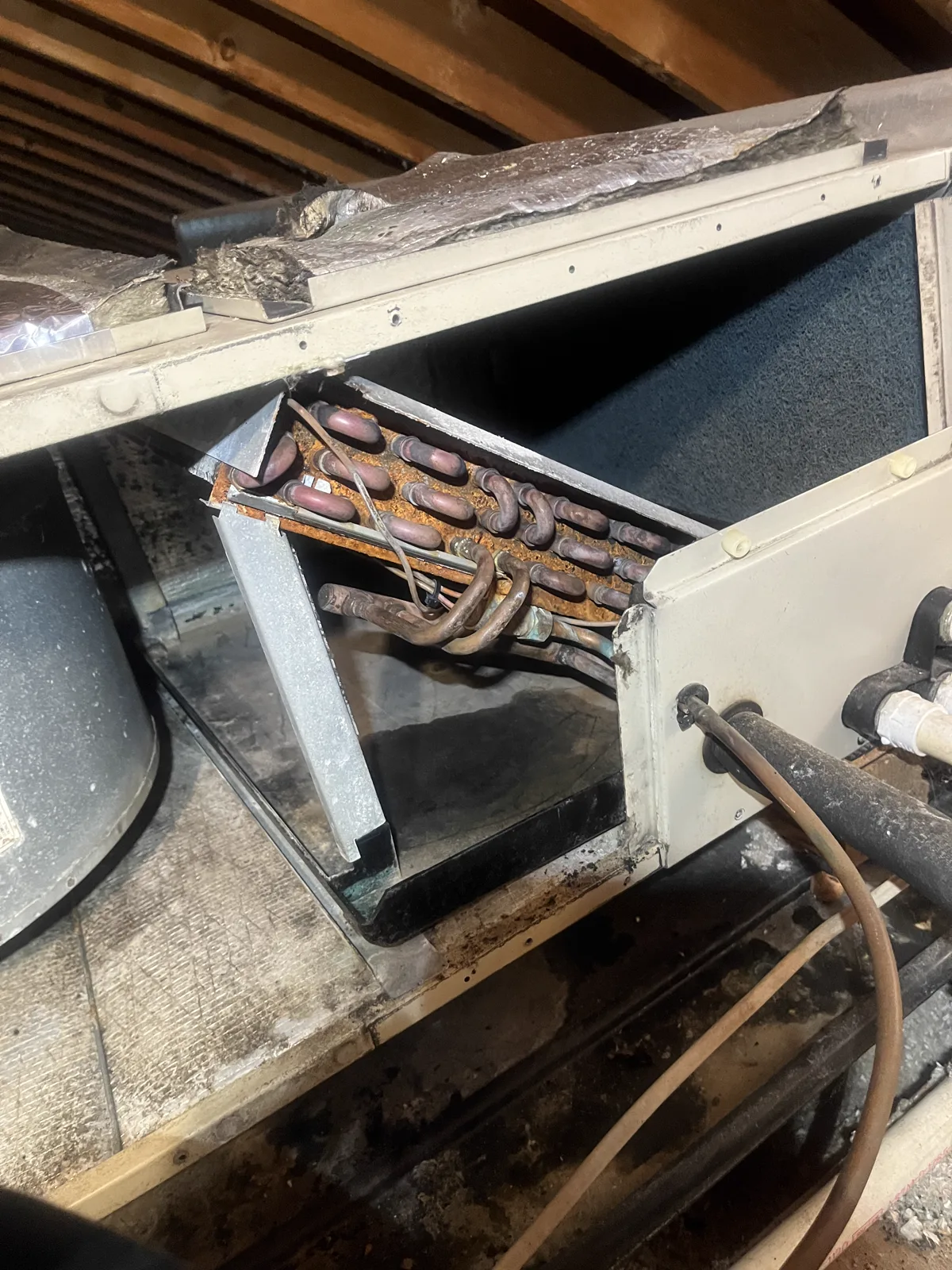
Evaporator Capillary Tube Repair
Completed HVAC evaporator-coil work focused on a leaking capillary tube, with close documentation of the coil and refrigerant tubing.
View completed workHome comfort systems
Residential HVAC services in Bucks and Montgomery County for heating, cooling, ventilation, ductwork, humidity, and controls.
Service directory
Select the equipment and the work you need: repair an existing fault, plan installation or replacement, or arrange maintenance.
Residential air conditioning repair, installation, replacement, and maintenance across Bucks and Montgomery County.
Open service page → 02Ductless mini-split services for single-zone and multi-zone repair, installation, maintenance, and ceiling-cassette equipment.
Open service page → 03Residential heating services covering fault diagnosis, new installation, replacement planning, maintenance, and urgent repair requests.
Open service page → 04Gas, electric, and oil furnace services covering repair, installation, replacement, and planned maintenance.
Open service page → 05Heat pump services for air-source, ductless, and dual-fuel systems, including repair, installation, replacement, and maintenance.
Open service page → 06Residential boiler services for gas, steam, hot-water, and condensing equipment, plus installation, replacement, and maintenance.
Open service page → 07Hydronic heating services for radiators, baseboards, radiant floors, circulation faults, and system-cleaning needs.
Open service page → 08Ventilation services for supply and exhaust systems, fan repair, new installations, and airflow balancing.
Open service page → 09Fresh-air ventilation services covering ERVs, HRVs, repair, and installation for residential HVAC systems.
Open service page → 10Ductwork services covering repair, replacement, installation, cleaning, sealing, insulation, leakage testing, and airflow balancing.
Open service page → 11Indoor air quality services covering assessment, filtration, purification, humidity control, and HVAC accessory installation.
Open service page → 12Thermostat and zoning services for repair, standard or smart control installation, and room-by-room HVAC control projects.
Open service page → 13Geothermal HVAC services covering heat-pump repair, installation, maintenance, and source-loop investigation.
Open service page →Better service intake
01IdentifyBrand, full model, serial, equipment type, and installation.
02ObserveTemperatures, errors, sounds, leaks, frost, timing, and recent changes.
03LocateProperty type, ZIP, equipment location, access, and operating constraints.
Use air conditioning for central cooling, furnaces or boilers for those heat sources, and heat pumps or mini-splits for systems that provide both heating and cooling. Ductwork and controls have separate service paths when distribution or commands are the issue.
You do not need to identify a failed part before contacting us. Explain which rooms are affected, what changed, and the equipment models you can safely read so the next step can be matched to the home.
Recent completed work
See recent repairs documented by our technicians with actual photos of the equipment and completed scope.
HVAC
Completed HVAC evaporator-coil work focused on a leaking capillary tube, with close documentation of the coil and refrigerant tubing.
View completed work HVAC
Completed HVAC furnace repair with PCB and igniter replacement, documented at the open furnace and lower control compartment.
View completed work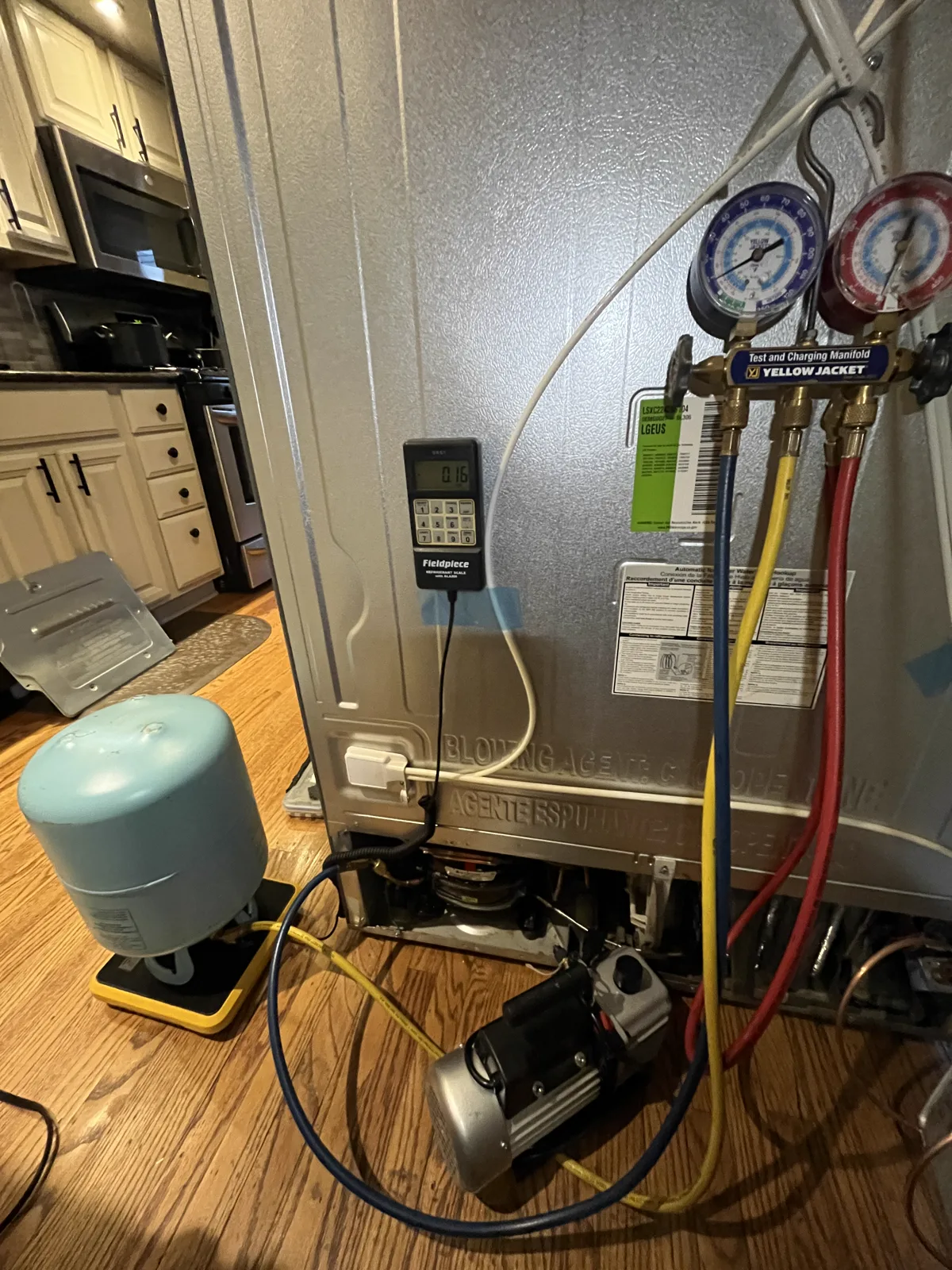 Residential Refrigeration
Filter drier replacement and system flushing on an LG refrigerator sealed circuit.
View completed work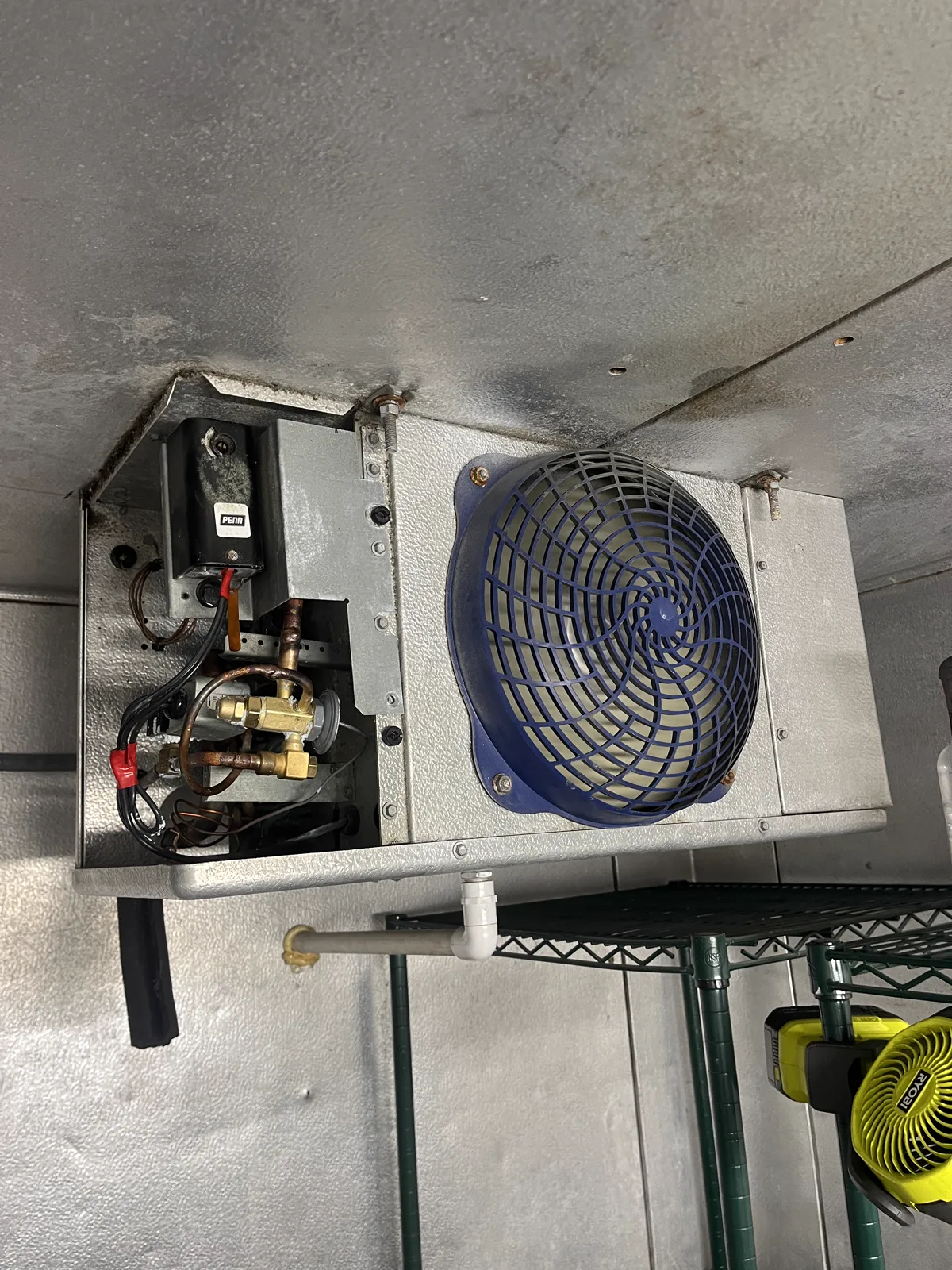 Commercial Refrigeration
TXV valve replacement and a refrigerant-system flush for contamination in a walk-in cooler.
View completed workResidential HVAC service starts with how the problem affects daily life. Perhaps the upstairs rooms stay warm, the furnace stops before the house reaches its setting, or a bedroom mini-split has begun leaking. Tell us which rooms are affected and whether the change is recent. A home-wide loss of conditioning calls for a different investigation from one room that has always been difficult to keep comfortable.
Premier serves homeowners in Bucks and Montgomery County with heating, cooling, airflow, and control service. You do not need to know which part has failed. A clear description of what changed, the equipment involved, and when it happens helps us plan an assessment around the real complaint rather than a guess from a thermostat display.
Many homes use connected indoor and outdoor equipment, but a working indoor fan does not establish that cooling or heating is working. Note what happens after the thermostat calls for operation and whether the symptom affects one mode or both. The model of the furnace or air handler and the model of the outdoor unit are each useful when accessible.
Choose air conditioning repair for central cooling that blows warm air, leaks, freezes, or cycles abnormally. For heating, identify the appliance type if you know it. Furnace service and boiler service involve different equipment and distribution systems, even though the room-level complaint may simply be no heat.
When a system recovers after a restart, record the message or behavior that appeared before it stopped. Include how long it had been running, which components continued operating, and whether the same issue occurred previously. This history can be valuable if the equipment happens to behave normally during the appointment.
A repair recommendation should explain the fault found and how the proposed work addresses it. If an earlier repair did not resolve the complaint, bring the invoice or notes rather than assuming the new problem must have the same cause. Separate unresolved room-comfort issues from a specific failed component so the next step is based on what the system is actually doing.
Before selecting replacement HVAC equipment, discuss the home as it is used today. Finished rooms, additions, changed occupancy, and persistent temperature differences may be relevant. Existing duct connections, available equipment space, electrical arrangements, and controls also influence the installation. The size of the old unit alone should not be the entire basis for a new proposal.
Ask what the replacement scope includes and which existing components will remain. If you are comparing systems, compare the installation work as well as the equipment names. Home heating replacement can address a planned upgrade, while a repair visit should first establish whether an identified fault can be corrected reasonably. Age provides context; it is not a diagnosis by itself.
A room addition or area without suitable duct service may lead to a discussion about ductless equipment. Consider where the indoor unit can distribute air, how it will be controlled, where drainage can run, and how the outdoor equipment can be accessed. Appearance matters, but the installation also needs room for operation and later service.
The ductless mini-split service section explains repair and installation options for these systems. If several indoor units share one outdoor unit, describe each affected zone separately. A problem at one head should not be confused with a fault affecting every connected room, and changing one component needs to account for the system it belongs to.
Uneven temperatures, drafts, or a room that feels humid can involve equipment operation, distribution, controls, and conditions in the home. Tell us when the complaint is strongest and whether it changed after a filter, duct, thermostat, or building alteration. Those observations help decide what should be measured or inspected rather than treating every comfort issue as a need for a larger unit.
Be clear about the result you want investigated. Repairing an air conditioner, evaluating room airflow, and measuring an indoor-air concern are different scopes. An accessory or control replacement should be recommended for an identified purpose, with its relationship to the existing system explained. No single device should be presented as a solution to every possible air-quality or comfort issue.
Make ordinary access available to the thermostat and equipment areas, and tell us about attic, closet, or basement restrictions. Keep pets away from the work area and have earlier service information ready if available. Provide accessible model details, but leave electrical panels, refrigerant connections, and unfamiliar controls untouched.
For planned care, residential HVAC maintenance can organize attention around the installed equipment and its condition. Report an active fault separately so diagnosis is not mistaken for a routine task. Include your address and ZIP with your service request; the team confirms coverage, equipment details, and appointment availability before the visit.
Ready to request service?
Online service request
Share the equipment, location, and preferred appointment window. We will contact you to confirm availability.