 HVAC
Evaporator Capillary Tube Repair
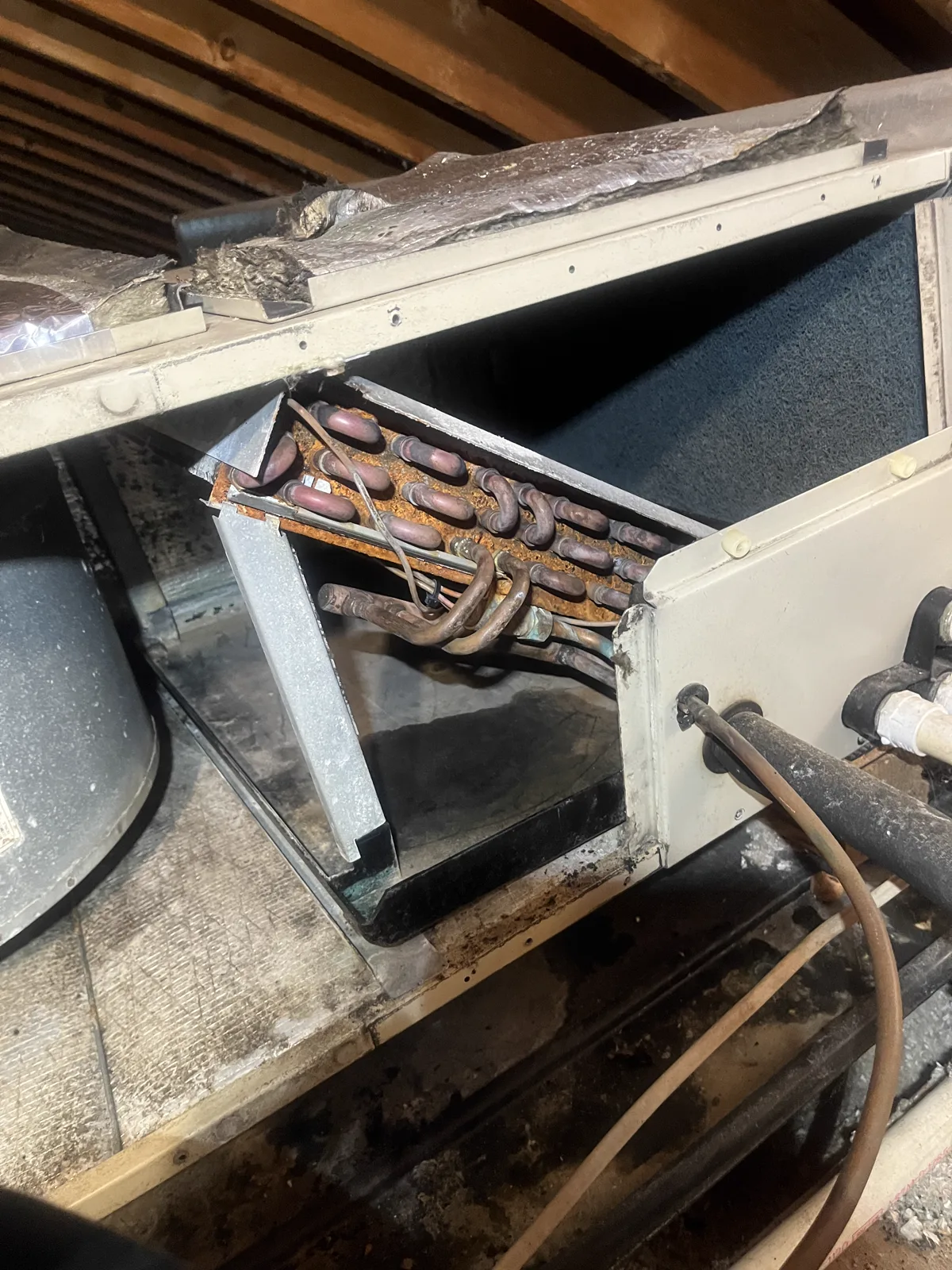
Completed HVAC evaporator-coil work focused on a leaking capillary tube, with close documentation of the coil and refrigerant tubing.
View completed workHome heating, cooling, and airflow
Residential air conditioning repair, installation, replacement, and maintenance across Bucks and Montgomery County.
Service directory
Select the equipment and the work you need: repair an existing fault, plan installation or replacement, or arrange maintenance.
Air conditioning repair in Bucks and Montgomery County for central AC that blows warm air, leaks water, freezes up, cycles repeatedly, or has weak airflow.
Open service page → 02Air conditioning installation in Bucks and Montgomery County, planned around cooling needs, ductwork, electrical service, drainage, and controls.
Open service page → 03Air conditioning replacement for aging or failed central systems, with attention to capacity, indoor equipment, ducts, and installation scope.
Open service page → 04Air conditioning maintenance for filters, coils, drains, airflow, electrical components, and seasonal cooling performance.
Open service page → 05Central air conditioner repair for whole-home cooling failures, uneven airflow, water leaks, icing, and electrical or control faults.
Open service page →Better service intake
01IdentifyBrand, full model, serial, equipment type, and installation.
02ObserveTemperatures, errors, sounds, leaks, frost, timing, and recent changes.
03LocateProperty type, ZIP, equipment location, access, and operating constraints.
If cooling has suddenly changed, begin with repair rather than assuming the system needs replacement. For a planned equipment change, provide existing models and the comfort issues you want the project to address.
Maintenance has its own inspection and care scope. Selecting the right service helps distinguish routine work, fault diagnosis, and a complete installation proposal so expectations and pricing can be discussed clearly.
Recent completed work
See recent repairs documented by our technicians with actual photos of the equipment and completed scope.
HVAC
Completed HVAC evaporator-coil work focused on a leaking capillary tube, with close documentation of the coil and refrigerant tubing.
View completed work HVAC
Completed HVAC furnace repair with PCB and igniter replacement, documented at the open furnace and lower control compartment.
View completed work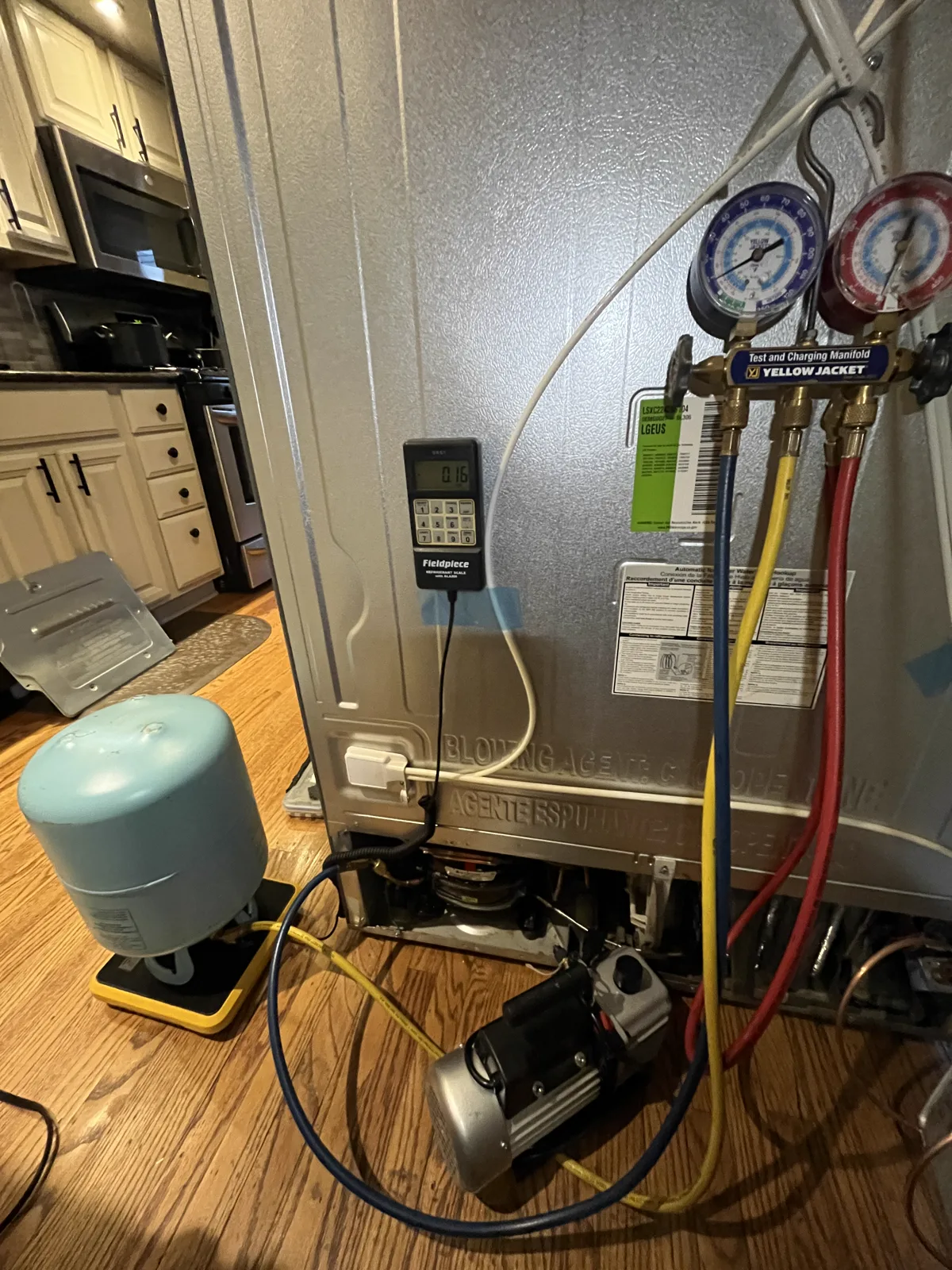 Residential Refrigeration
Filter drier replacement and system flushing on an LG refrigerator sealed circuit.
View completed work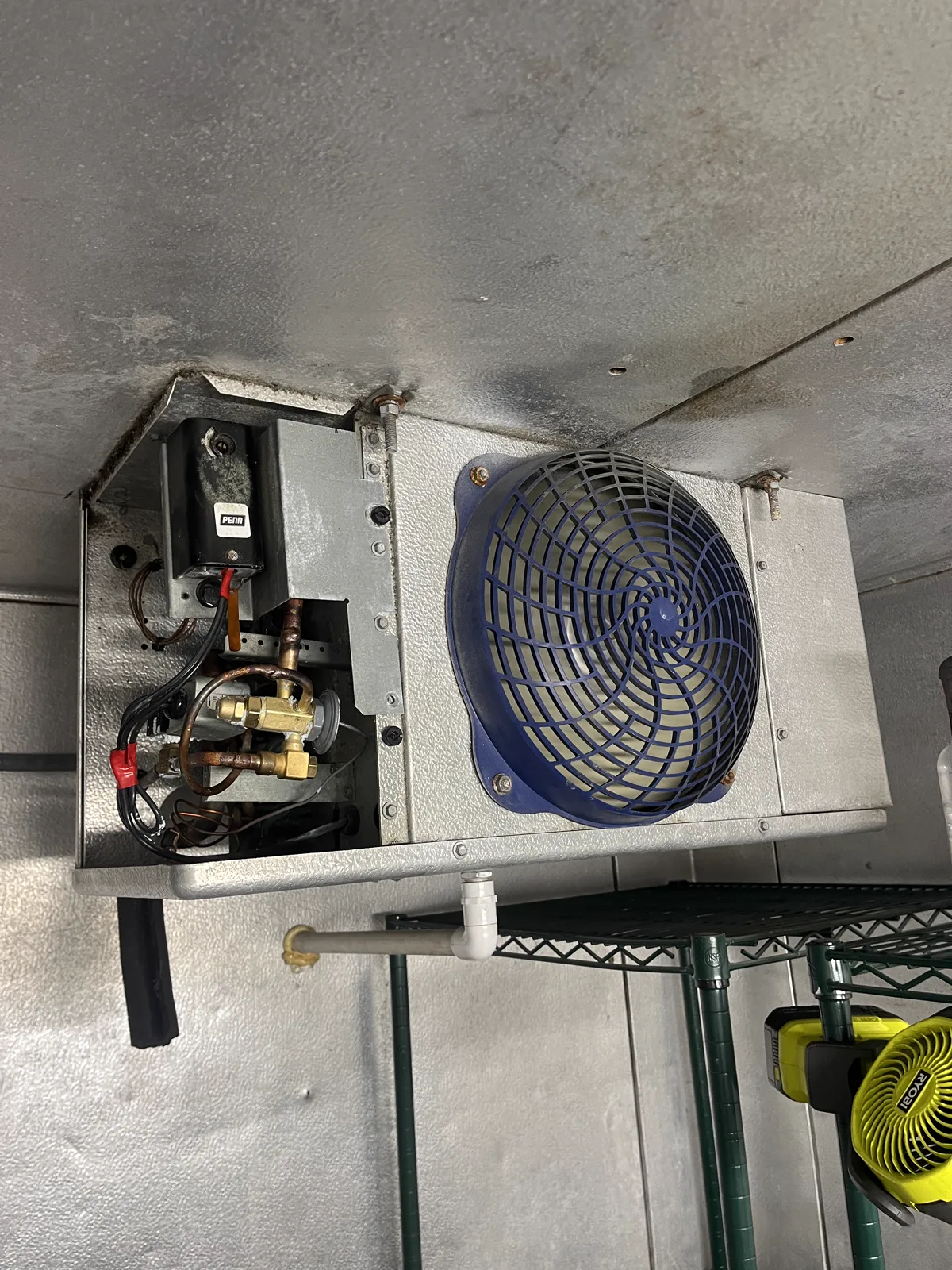 Commercial Refrigeration
TXV valve replacement and a refrigerant-system flush for contamination in a walk-in cooler.
View completed workIf your air conditioner is running but the house is not cooling, begin by describing the air you feel and the areas affected. Warm air from otherwise normal airflow is different from very little air reaching the rooms. Tell us whether the condition affects the whole home, a floor, or one space, and whether it is new or a longstanding concern.
Premier provides residential air conditioning service in Bucks and Montgomery County for central systems and their connected indoor equipment. Central AC repair can investigate a cooling failure, while a persistent room-to-room difference may also call for a closer look at distribution and controls. The symptom helps organize the visit without establishing the failed part in advance.
An air-conditioning system transfers heat through connected components. The outdoor unit is visible, but the indoor coil, blower, controls, and drainage also matter to performance. Note whether the indoor fan runs, whether the outdoor equipment starts, and whether the complaint changes after the system has operated for a while. There is no need to open a cover to provide those observations.
Include both equipment models if accessible and mention recent repairs or thermostat changes. A replacement component must suit the actual system, not simply the brand name. A clear diagnostic explanation should identify where normal operation is interrupted and which finding supports the recommended electrical, control, airflow, or refrigeration work.
A wet area near indoor equipment or visible ice can accompany several different conditions. Describe where you see it and whether cooling or airflow changed at the same time. Ice is not proof that refrigerant is low, and a water complaint should not automatically be dismissed as a routine drain issue before the installation is assessed.
Avoid contact with wet electrical equipment and do not chip ice or open the refrigeration circuit. For an air conditioning repair request, include the location of the symptom, any displayed message, and whether it has happened before. If another contractor recently cleaned or serviced the equipment, that history can help explain the timing without determining the cause by itself.
For air conditioning installation, discuss how the home is used, which rooms need conditioning, and where equipment can be placed. Capacity, distribution, controls, connections, and access belong in the same conversation. A proposal based only on the nominal size of an old unit may leave existing comfort concerns unexplained.
Ask which indoor and outdoor components are included and what work is needed to connect them. The scope should also explain any duct, electrical, drainage, or control work associated with the project. Knowing what remains in place and what will change makes it easier to compare proposals and understand whether the installation addresses your stated concerns.
An older air conditioner can have a repairable fault; a newer system can have an installation issue that a replacement would not automatically solve. Start with the diagnosis, then consider the proposed repair, parts support, condition of the rest of the system, and any repeated failures. Avoid using age or a single repair estimate as the only information in the decision.
If air conditioning replacement is appropriate, include the wider installation in the comparison. Ask how the new equipment will work with the remaining components and whether persistent airflow or humidity concerns need separate attention. A useful recommendation explains the tradeoffs and proposed scope without promising a particular bill reduction or assuming every room will improve from one equipment change.
A planned air conditioning maintenance visit can organize inspection and care around the system, access, and operating history. Describe any recent change in sound, run time, leakage, or comfort when scheduling. That allows an active fault to be identified as a diagnostic request rather than discovered only after the routine work begins.
The value of the visit includes a record of findings and understandable follow-up recommendations. Cleaning and inspection do not guarantee that a component cannot fail later, and they should not be presented as a universal cure for poor cooling. Ask which observations need repair, which can be monitored, and which require additional testing or a separate scope.
Record when the complaint started and whether it appears during long runs, particular times of day, or after a control change. Existing room readings and error messages can help if the problem is intermittent. A few clear observations are more useful than repeated thermostat changes that make the original condition difficult to follow.
Use the booking form with your service address, ZIP, equipment information, and preferred time. Describe access to indoor and outdoor equipment and any restrictions in the work area. The team reviews the request before confirming the appointment. You can ask about service without deciding in advance whether the solution is a repair, maintenance work, or a replacement system.
Ready to request service?
Online service request
Share the equipment, location, and preferred appointment window. We will contact you to confirm availability.