High-End Refrigeration guide
Repair or Replace a Built-In Refrigerator?
A framework for comparing equipment age, installation, failure type, parts support, cabinet fit, and long-term ownership cost.
Safety boundary
Use this guide to observe—not dismantle.
Do not bypass safety controls or open energized, gas-fired, pressurized, rotating, or refrigerant-containing equipment. Follow manufacturer and site procedures.
Related serviceStart with the failure—not age alone
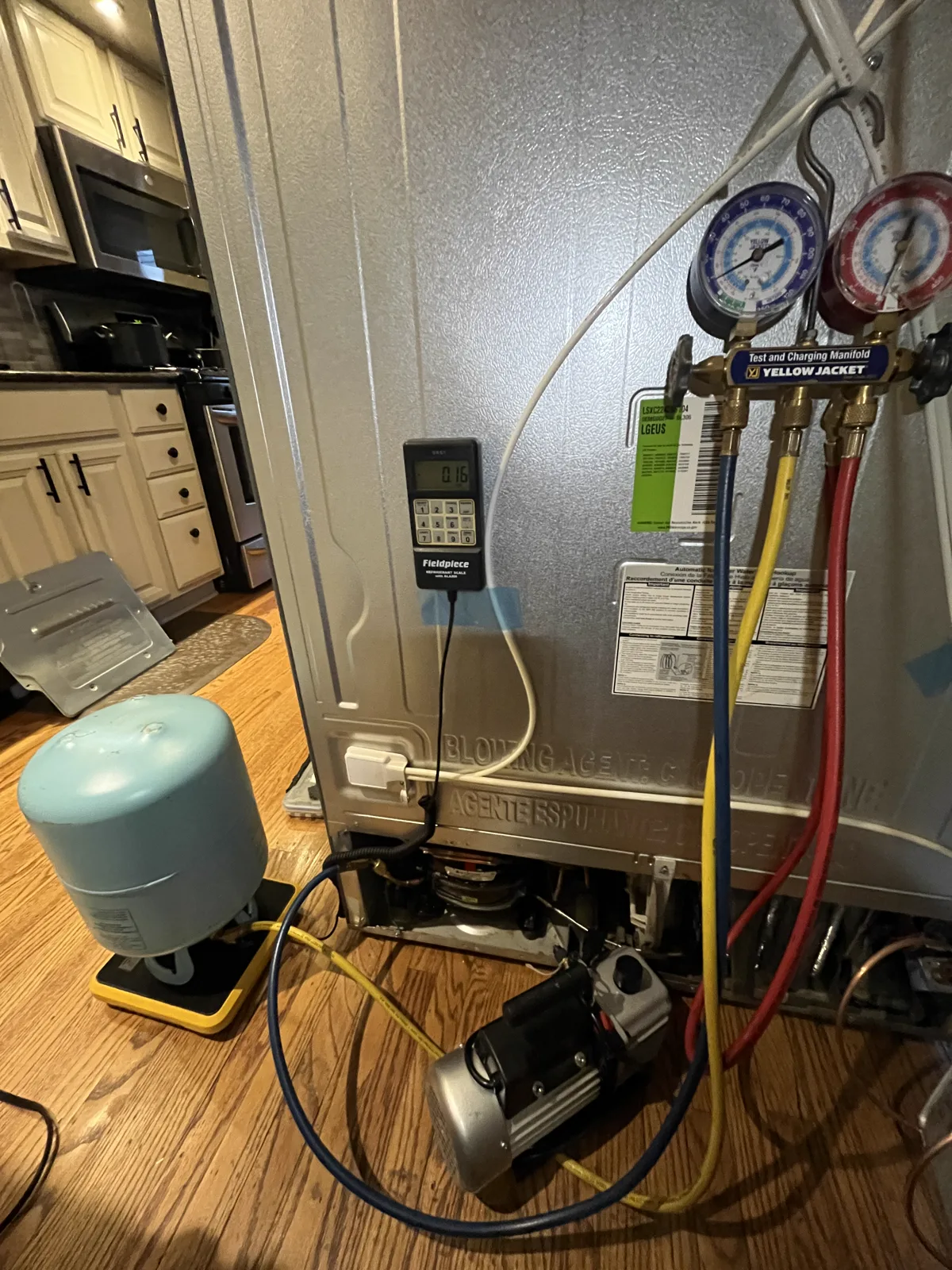
Age is useful context, but it does not identify the right decision by itself. Separate a correctable door, fan, sensor, drain, or control issue from a larger sealed-system or cabinet problem. Record temperatures, fault history, operating noise, recent repairs, and whether the condition is isolated or recurring. A qualified diagnosis should define the failed function and the condition of the rest of the appliance before repair and replacement costs are compared.
Account for the integrated installation
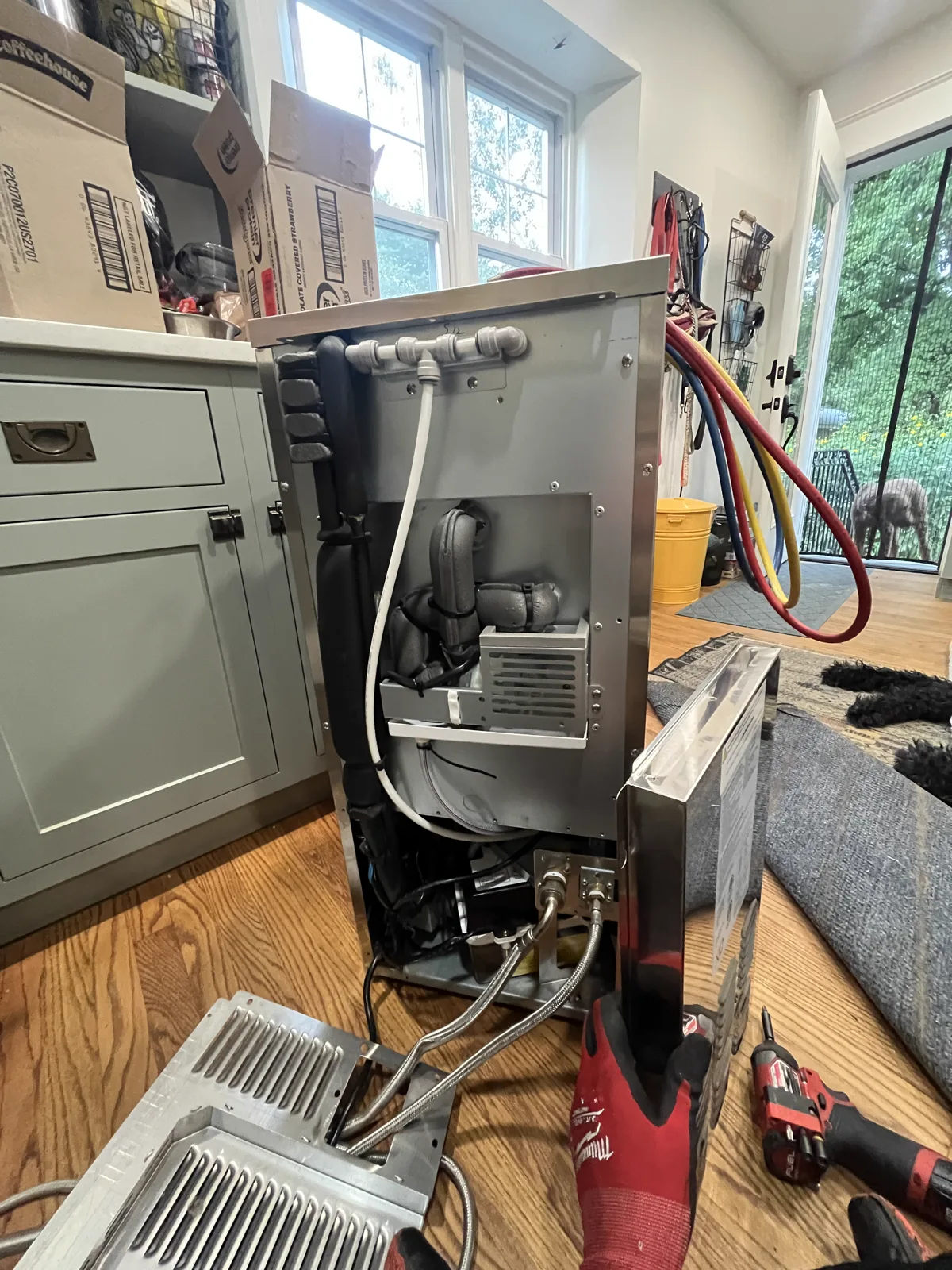
A built-in refrigerator is part of a cabinet opening, panel system, ventilation path, electrical connection, water connection, and kitchen layout. Replacement may require panel modification, hinge changes, floor protection, delivery access, or a different opening. Repair may preserve a matched installation that would be expensive to reproduce. Measure the opening and photograph the enclosure, grille, panels, hinges, and model tag before assuming a new unit will be a direct fit.
Compare repair scope and replacement disruption
Compare the quoted repair, parts support, equipment condition, recurrence risk, energy and temperature performance, and expected ownership horizon. Then compare the complete replacement scope—not only the appliance price—including removal, delivery, cabinetry, panels, plumbing, electrical work, and commissioning. The better choice is the option with the more acceptable total risk, cost, and disruption for that installation.