Serving Bucks & Montgomery County, Pennsylvania

Maintenance plans for homes & businesses

Walk-In Refrigeration guide

Walk-In Cooler Running Warm: First Checks for Operators

A safe operator-level checklist for documenting temperature, door use, frost, airflow, alarms, and recent changes.

Publication notePublished educational guide · Updated August 2026

Safety boundary

Use this guide to observe—not dismantle.

Do not bypass safety controls or open energized, gas-fired, pressurized, rotating, or refrigerant-containing equipment. Follow manufacturer and site procedures.

Related service

Protect product under the site food-safety plan

Follow the facility’s approved food-safety procedure and local requirements rather than relying on the thermostat display alone. Record air and product temperatures with the time, relocate product only under the site plan, and avoid unnecessary door openings. Do not reset controls repeatedly or chip ice from components. If there is an electrical, refrigerant, structural, or slip hazard, restrict access and use the appropriate emergency procedure.

Limit door openings and document conditions

Check whether the door closes fully, the gasket is intact, the closer works, strip curtains are positioned correctly, and product is not blocking the evaporator airflow. Note recent deliveries, unusually high door traffic, hot product loading, cleaning, construction, or a power interruption. Photograph frost patterns, water, the controller display, and the relationship between stored product and air paths without removing guards.

Prepare a useful service history

Provide the box setpoint, current readings, alarm time, equipment brand and model, condensing-unit location, and whether evaporator fans and the condensing unit appear to operate. Include previous repairs, recurring icing, defrost changes, and any work by other trades. This timeline helps the technician evaluate load, airflow, door infiltration, defrost, controls, and refrigeration performance in the correct sequence.
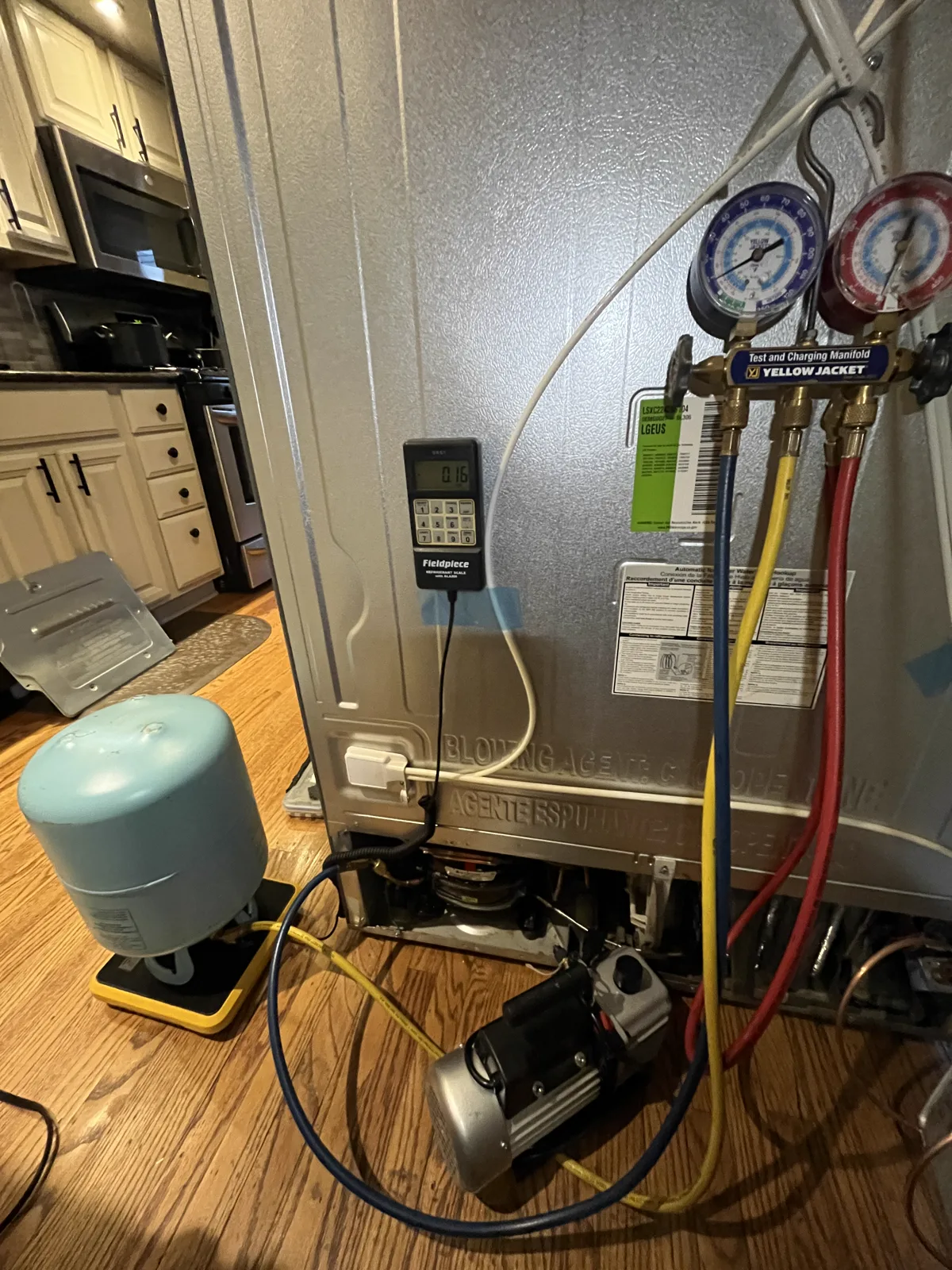
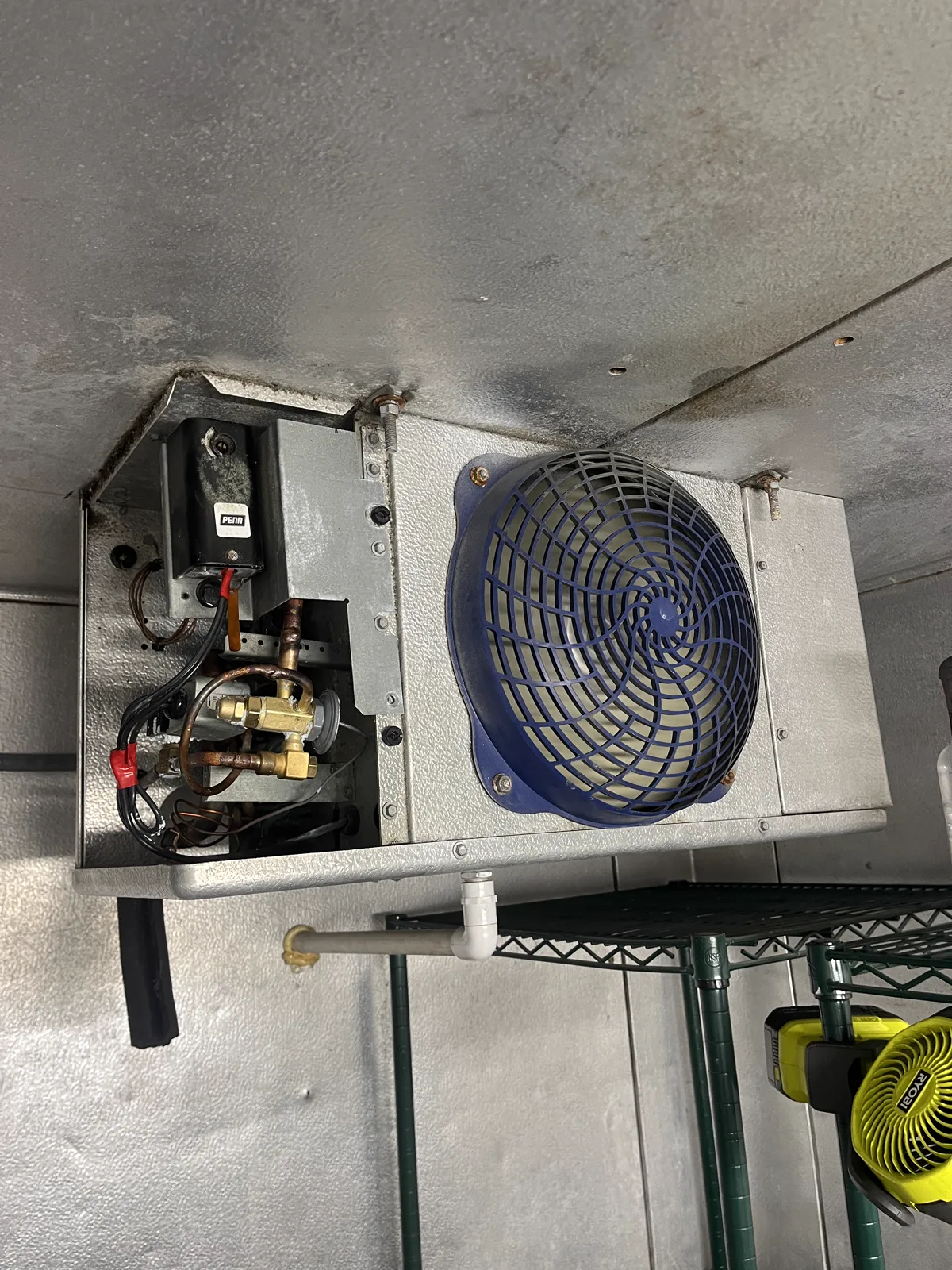
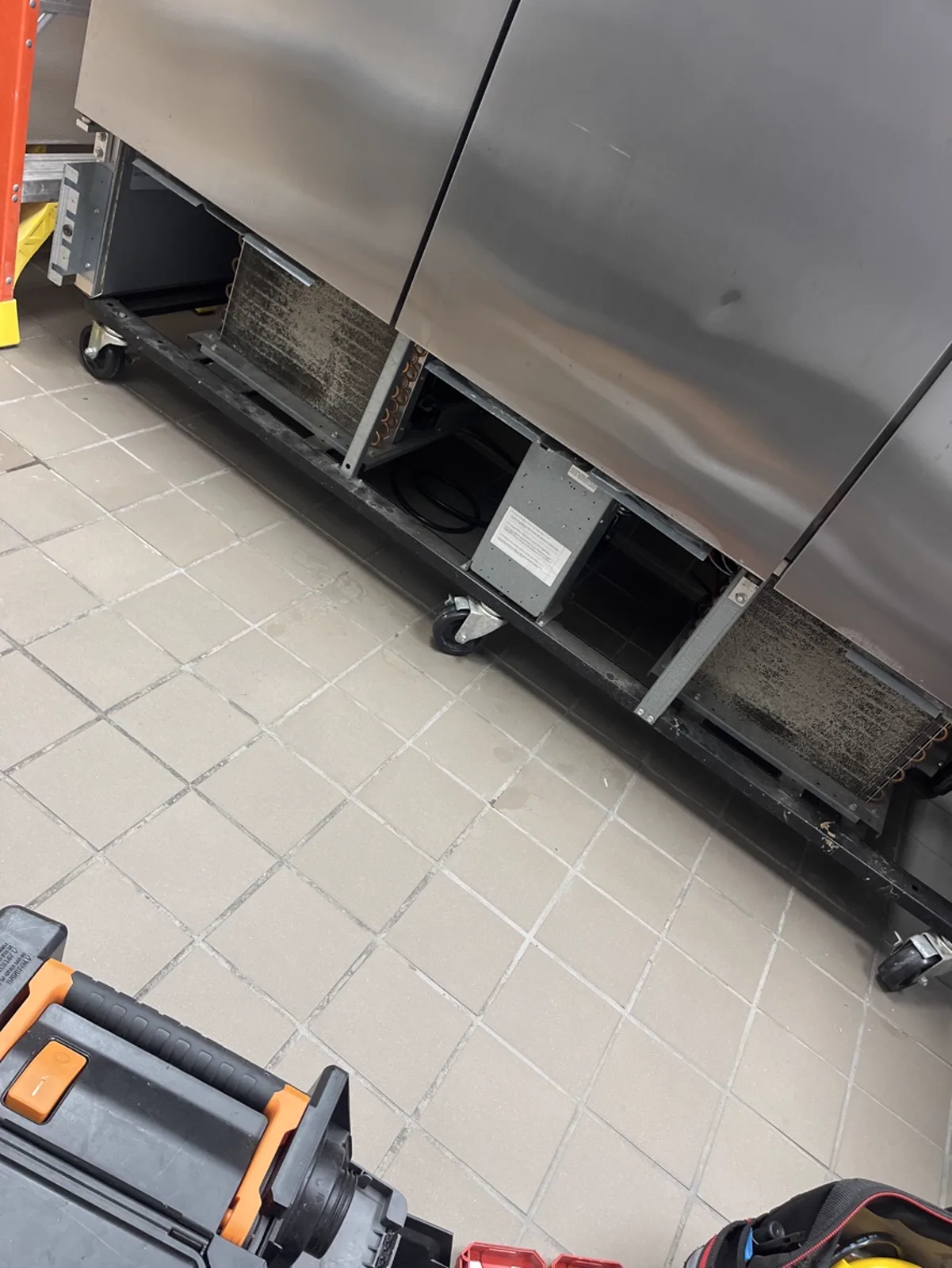
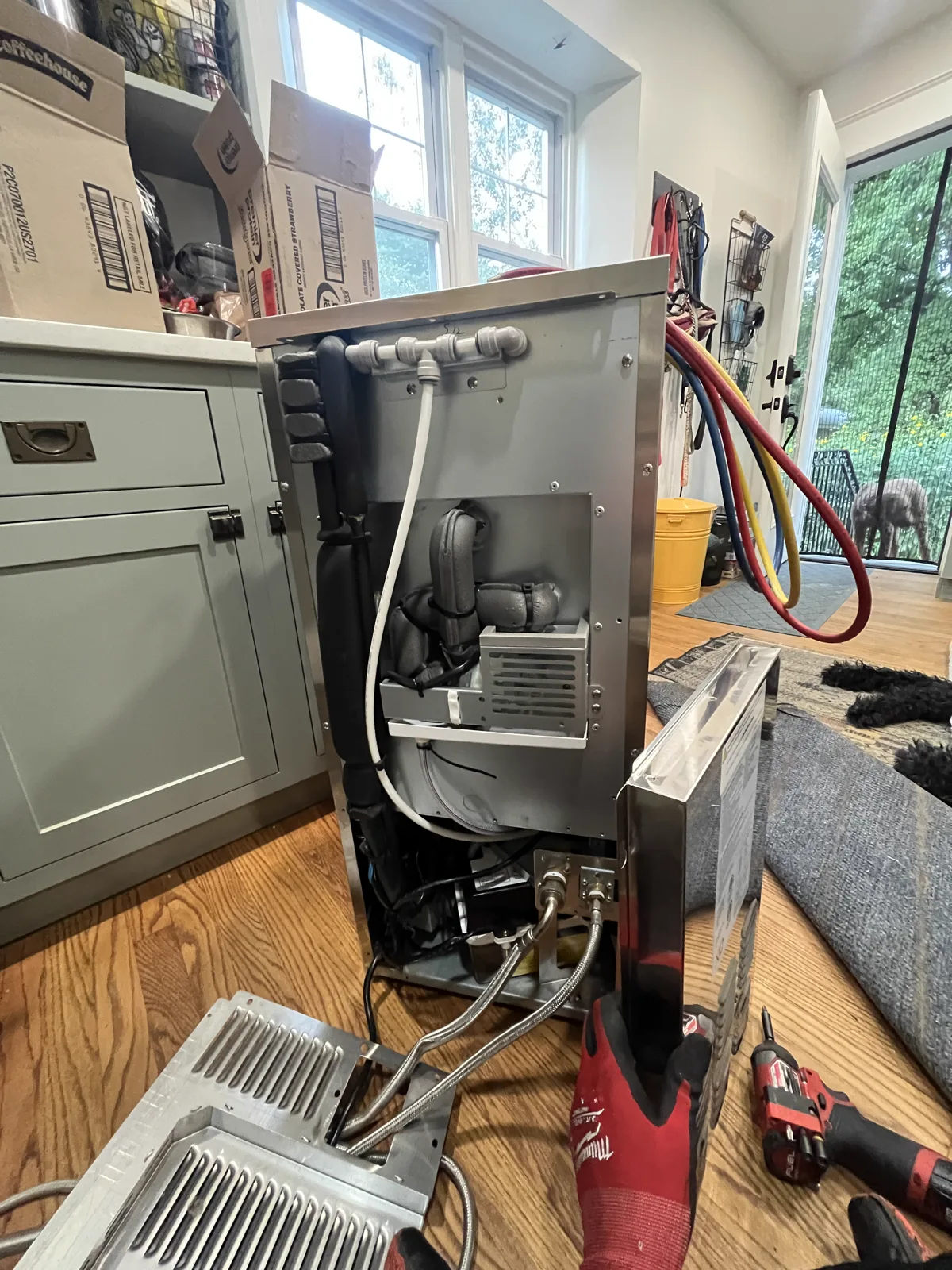
Recent completed work

Real equipment. Real field documentation.

See recent repairs documented by our technicians with actual photos of the equipment and completed scope.

In-depth service guidance

Understanding walk-in cooler running warm: first checks for operators guide through operating history and system relationships

The Walk-In Cooler Running Warm: First Checks for Operators guide is designed to improve the information available before a service conversation. It develops the topics of protect product under the site food-safety plan, limit door openings and document conditions, and prepare a useful service history without presenting a website checklist as a diagnosis. Equipment behavior should be connected to the full model, installation, operating history, measured conditions, and applicable manufacturer or site procedures.

Start with the equipment in its actual setting: reader observations and safety boundaries

A useful reading of this guide separates observations from conclusions. Customers can record changes in temperature, sound, airflow, water, ice, controls, timing, and operating load, but guarded, energized, gas-fired, rotating, pressurized, or refrigerant-containing sections should remain closed. The exact cause depends on inspection and testing appropriate to the equipment.

Installation context belongs in a this guide-led equipment review evaluation. Clearance, surrounding cabinetry, roof or mechanical-room conditions, electrical supply, drainage, water connections, duct transitions, and service access can change how protect product under the site food-safety plan, limit door openings and document conditions, and prepare a useful service history performs. An apparent component problem may be influenced by the environment around the unit, so the equipment and its interfaces should be considered together.

Build a useful operating history before the visit: the page purpose and connected service information

Details that make the request more useful

  • For the Walk In Cooler Temperature Guide page context, identify the exact system, property use, location, and reason for review before assuming a repair scope.
  • Explain cabinet, roof, mechanical-room, parking, gate, tenant, escort, operating-hour, or stored-product access that can affect safe inspection.
  • Identify visible water, ice, unusual odor, severe noise, repeated breaker trips, or another condition that may require equipment shutdown or a safety procedure first.
  • Provide the exact service address and ZIP in Bucks and Montgomery County, Pennsylvania so geographic routing is reviewed together with equipment scope and availability.
  • State the practical impact—comfort, product temperature, occupied area, process, tenant, guest, or schedule—without estimating a cause or financial loss.
  • Photograph the complete model and serial label for Walk-In Cooler Running Warm: First Checks for Operators; include the full plate rather than only the manufacturer name or control display.

Define the next step from evidence, not assumptions: scope boundaries for walk in cooler temperature guide

After using the guide, compare the observations with the related service scope. If the condition remains unexplained, unsafe, or disruptive, submit the model information, symptom timeline, service ZIP, and access details for review. The educational page supports that next step; it does not guarantee an appointment, part, repair, or outcome.

Next step

Prepare the evidence, then request the appropriate review

Before requesting walk-in cooler running warm: first checks for operators guide, collect the complete model information, a concise symptom timeline, safe photos, the service address and ZIP, and any property-access details. Stop ordinary troubleshooting when equipment appears unsafe, and follow the applicable manufacturer, facility, utility, or emergency procedure first.

Prepare the related service request

Questions & answers

Walk-In Cooler Running Warm: First Checks for Operators FAQ

Direct answers about scope, preparation, safety, service coverage, and the next useful step.

What is the main purpose of this Walk-In Cooler Running Warm: First Checks for Operators guide?

This guide helps a homeowner, operator, or facility contact collect useful observations and understand the decision factors described in protect product under the site food-safety plan, limit door openings and document conditions, prepare a useful service history. It supports a better service conversation but does not replace the equipment manual, site procedure, or qualified diagnosis.

Can this guide be used to diagnose the equipment remotely?

No. The information can organize symptoms, history, temperatures, controls, and installation context, but a cause should not be stated without the exact equipment and appropriate measurements. Electrical, gas-fired, pressurized, rotating, high-voltage, and refrigerant-containing sections should not be opened for a website checklist.

What information should I record after reading Walk-In Cooler Running Warm: First Checks for Operators?

Record the complete model and serial numbers, setpoints and measured conditions, error codes, sounds, water or ice, operating timing, recent changes, service history, property type, service ZIP, and safe photos. For commercial equipment, add product or process risk, operating hours, and access information.

When should I stop using the equipment discussed in Walk-In Cooler Running Warm: First Checks for Operators?

Stop and follow the appropriate safety procedure for smoke, burning odor, sparking, gas or carbon-monoxide concern, repeated breaker trips, water at electrical parts, severe mechanical noise, visible overheating, or another condition that appears unsafe. Protect temperature-sensitive product under the facility plan when relevant.

What is the next step after using the Walk-In Cooler Running Warm: First Checks for Operators checklist?

Compare your observations with the related service page, then submit the equipment model, symptoms, ZIP, and access details. The service team can review whether the request fits the confirmed scope and what additional information is needed before scheduling or preparing a proposal.

Ready to request service?

Send the equipment details while they are in front of you.

Call now Book service