Wine Refrigeration guide
Wine Cooler Temperature Problems: What to Record
What temperature trends, humidity signs, airflow changes, control readings, and installation details are useful before service.
Safety boundary
Use this guide to observe—not dismantle.
Do not bypass safety controls or open energized, gas-fired, pressurized, rotating, or refrigerant-containing equipment. Follow manufacturer and site procedures.
Related serviceMeasure a trend instead of one moment
A single reading can be affected by a recent door opening, loading, defrost activity, or sensor location. Record the displayed temperature and an independent thermometer reading at consistent times for at least several operating cycles when product safety allows. Note the setpoint, room temperature, door activity, which zone is affected, and whether the compressor and fans appear to start and stop. A trend helps distinguish slow recovery, cycling instability, and a persistent loss of capacity.
Observe condensation, airflow, and the door
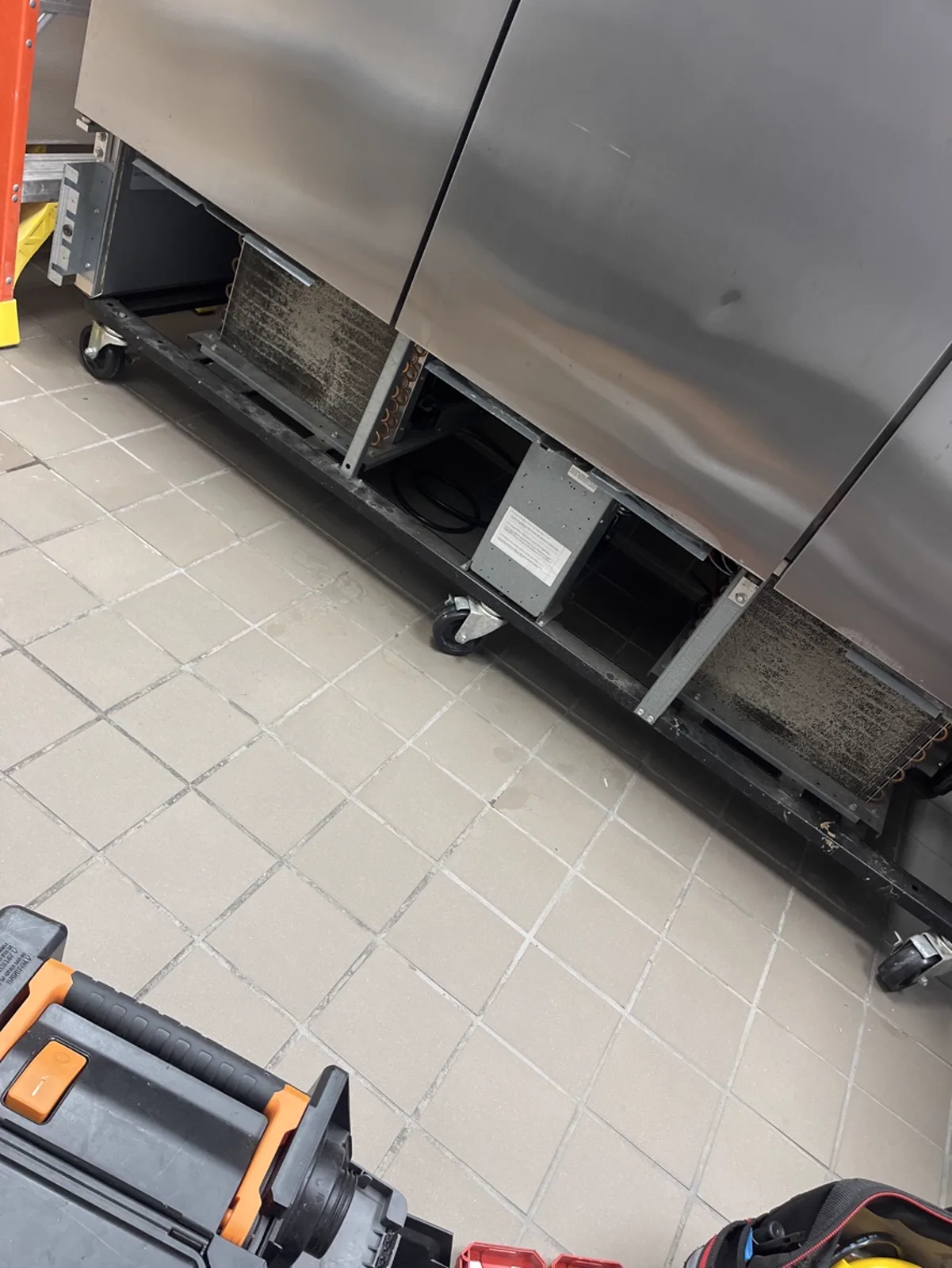
Look for condensation location, frost, blocked interior vents, a loose gasket, a door that does not close evenly, or warm air entering around a panel-ready installation. Do not dismantle the cabinet. Photograph the grille and surrounding clearances because restricted heat rejection can change runtime and temperature. On dual-zone equipment, note whether both zones drift together or one zone behaves differently; that pattern is useful diagnostic context.
Record the product and installation context
Provide the complete model and serial numbers, approximate bottle load, recent loading changes, control messages, unusual sounds, leak location, and any recent power interruption or service. For cellar systems, include room dimensions, insulation or vapor-barrier information if available, ambient conditions, supply and return locations, and door construction. These details help separate an appliance fault from a heat-load, airflow, or enclosure problem.